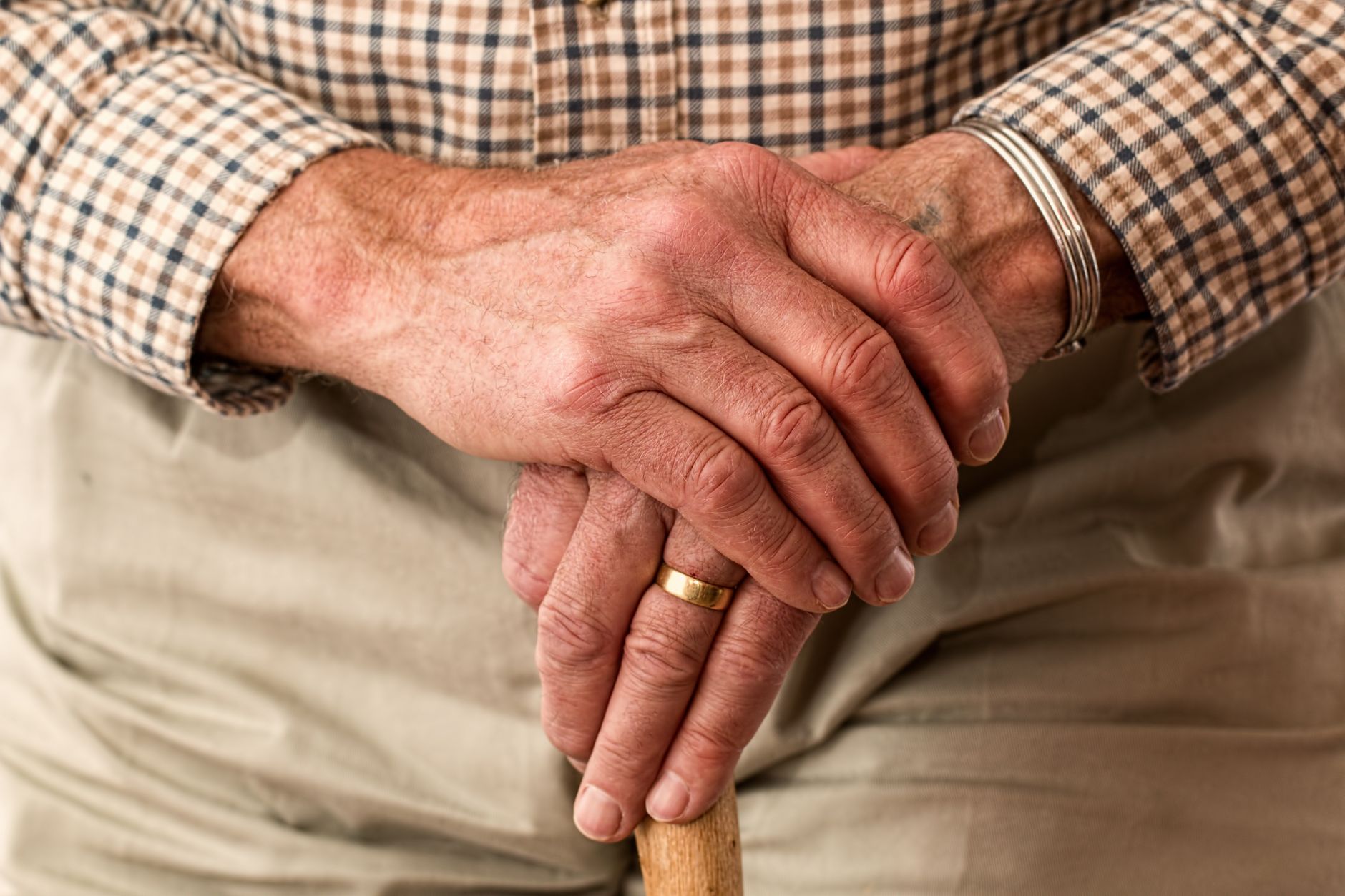
Parkinson’s tremor and essential tremor are often confused because both produce involuntary shaking, but they are distinct neurological conditions arising from different parts of the brain and appearing under different circumstances. The key difference lies in timing: Parkinson’s tremor is a resting tremor that occurs when your hands, arms, legs, or jaw are relaxed and still, while essential tremor is an action tremor that appears when you try to move or hold a position, such as reaching for a coffee cup or writing. A person with Parkinson’s might have noticeably shaking hands while sitting at rest watching television, but the tremor often quiets down when reaching for the remote. Someone with essential tremor experiences the opposite—their hands shake most when they’re trying to do something purposeful.
These two conditions have different underlying brain involvement, affect different populations, and respond differently to medication. Parkinson’s disease involves degeneration of dopamine-producing cells in the substantia nigra, a region deep in the midbrain, while essential tremor relates to abnormal electrical activity in circuits connecting the cerebellum to other brain regions. This physiological distinction explains why a medication that effectively controls Parkinson’s tremor may have little effect on essential tremor, and vice versa. Understanding the differences is crucial because misdiagnosis delays appropriate treatment and can lead to years of ineffective medication trials.
Table of Contents
- What Are the Main Clinical Differences Between Parkinson’s Tremor and Essential Tremor?
- How Do the Neurological Origins Explain These Tremor Patterns?
- Distinguishing Tremor Characteristics and Physical Presentation
- Diagnosis Methods and Why Getting It Right Matters
- Common Diagnostic Challenges and Misdiagnosis Risks
- Age of Onset and Family History Patterns
- Medication Response and Treatment Implications
What Are the Main Clinical Differences Between Parkinson’s Tremor and Essential Tremor?
The most clinically useful distinction is when the tremor appears. Parkinson’s tremor, also called a resting tremor, is most noticeable when your limbs are supported and completely relaxed—like your hands resting on your lap. The moment you try to use that hand for a task, the tremor typically reduces or disappears. A patient might show obvious hand shaking during a medical examination while sitting quietly, but when asked to touch their finger to their nose (a standard neurological test), the tremor often improves. Essential tremor works in the opposite direction: it appears or worsens when you’re actively using your hands, maintaining a posture, or trying to perform fine motor tasks.
Frequency also differs measurably. Parkinson’s tremor typically beats at 3 to 6 cycles per second, producing a relatively slow, pill-rolling motion (named because it looks like rolling a small pill between thumb and fingers). Essential tremor generally beats faster, at 4 to 12 cycles per second, creating a finer, more rapid oscillation. A person with Parkinson’s tremor often describes it as a slow, obvious wobbling, while someone with essential tremor reports a faster, finer shaking. These frequency differences reflect the distinct neural circuits involved—Parkinson’s involves the basal ganglia, while essential tremor involves cerebellar circuits.
How Do the Neurological Origins Explain These Tremor Patterns?
parkinson‘s tremor emerges because dopamine-producing neurons in the substantia nigra are dying, disrupting the normal regulation of movement circuits in the basal ganglia. The basal ganglia normally maintain a delicate balance between excitation and inhibition to coordinate smooth movement. When dopamine declines—as it does in Parkinson’s—this balance tips toward excessive inhibition, creating irregular bursts of electrical activity that produce the characteristic resting tremor. This is why dopamine-replacement therapy (like levodopa) often significantly reduces Parkinson’s tremor. Restoring dopamine helps restore the normal balance in the basal ganglia.
Essential tremor involves a different neural malfunction. Neuroimaging and electrophysiological studies suggest that the cerebellum and its connections to the thalamus and brainstem are generating abnormal oscillations. Unlike Parkinson’s, essential tremor is not caused by dopamine loss, which is why dopamine medications typically do not help. Instead, essential tremor sometimes responds to medications like propranolol (a beta-blocker) or primidone (an anticonvulsant) that appear to dampen these abnormal cerebellar circuits. A practical consequence: a person with essential tremor who is given levodopa to treat suspected Parkinson’s will likely experience no improvement in their tremor, a clue that misdiagnosis has occurred. The neurological difference means these conditions require fundamentally different treatment approaches.
Distinguishing Tremor Characteristics and Physical Presentation
Beyond the resting versus action distinction, tremor characteristics offer additional diagnostic clues. Parkinson’s tremor is often asymmetrical—more pronounced on one side of the body than the other—and frequently begins in one hand or one leg before spreading. A patient might report that their right hand shook for months before the left hand developed tremor. Essential tremor, by contrast, tends to be more symmetrical, affecting both sides roughly equally and often progressing at a similar rate bilaterally. A person with essential tremor with a family history of tremor (which is common) frequently notes that both they and their parent or sibling shake similarly.
The distribution of the tremor also differs. Parkinson’s tremor typically affects the hands first, but can involve the jaw, lips, chin, or legs—producing head nodding or leg shaking while seated. Essential tremor more commonly affects the hands and arms, though head tremor (yes-yes or no-no head shaking) and voice tremor are also possible. Jaw tremor in Parkinson’s, while present in perhaps 10-20% of patients, is relatively rare in essential tremor. A patient reporting combined hand tremor with an obvious tremor in their voice and jaw, along with other Parkinson’s features like slowness or rigidity, strongly points toward Parkinson’s disease rather than essential tremor alone.
Diagnosis Methods and Why Getting It Right Matters
Accurate diagnosis typically begins with the clinical history and neurological examination. A neurologist will observe the tremor at rest and during purposeful movement, measure its frequency and symmetry, and assess other motor features. For Parkinson’s, the examiner looks for rigidity (resistance to passive movement), bradykinesia (slowed movement), postural instability, and the gait changes that often accompany tremor. Essential tremor patients, by contrast, usually have normal strength, speed, and coordination; their primary symptom is the tremor itself. A straightforward presentation—isolated tremor during purposeful activity, no other motor signs, and a strong family history of tremor—typically points toward essential tremor. Tremor at rest, combined with rigidity and slowness, points toward Parkinson’s.
📨 Get Free Parkinson's Guides Alerts
Free · No spam · Unsubscribe anytime
Advanced testing can clarify ambiguous cases. Dopamine transporter (DaT) imaging, a type of nuclear medicine scan, shows reduced dopamine activity in the striatum (a key brain region) in Parkinson’s disease but is normal in essential tremor. If a patient has an unclear clinical picture, DaT scan can confirm whether dopamine neurons are genuinely degenerating. This matters because misdiagnosis leads to ineffective medication trials and psychological distress. A 52-year-old with a strong family history of tremor and isolated action tremor might undergo months of levodopa trials that don’t help before a correct diagnosis of essential tremor is made. Getting the diagnosis right from the start allows focused treatment and prevents unnecessary medication exposure.
Common Diagnostic Challenges and Misdiagnosis Risks
One frequent source of confusion is that some Parkinson’s patients develop postural or kinetic tremor (tremor during movement) in addition to their resting tremor, making the presentation seem more like essential tremor. A patient might accurately report that their tremor worsens when they hold their coffee cup, not realizing that Parkinson’s can produce tremor both at rest and during action. Conversely, some people with essential tremor experience mild tremor while their hands are completely at rest, creating overlap that confuses both patients and clinicians. The key is that in Parkinson’s, rest tremor is the most prominent and characteristic feature, whereas in essential tremor, the tremor during purposeful activity is dominant.
Another pitfall is that neurologists see relatively few essential tremor patients compared to the general population prevalence—essential tremor affects 4-5% of the adult population, making it more common than Parkinson’s—so diagnostic bias can work in either direction. A young patient with rapidly worsening tremor might be assumed to have essential tremor based on age alone, even if other features favor Parkinson’s. An older patient with tremor might be assumed to have Parkinson’s without careful examination for other features. Misdiagnosis is not rare: studies suggest that 5-25% of people initially diagnosed with Parkinson’s disease may not actually have it, sometimes because essential tremor was mistaken for Parkinson’s tremor. This misclassification has real consequences, leading to inappropriate medication and delayed correct diagnosis.
Age of Onset and Family History Patterns
Parkinson’s disease typically begins between ages 50 and 60, though early-onset cases occur before age 40. The disease is sporadic in most cases, meaning it occurs without a family history, though genetic forms do exist. A 45-year-old with a tremor, no family history of early tremor, and no relatives with Parkinson’s might have early-onset Parkinson’s, but the absence of family history does not rule it out. Essential tremor, by contrast, frequently runs in families and typically begins earlier—often in the 20s, 30s, or 40s. A strong family history of tremor spanning multiple generations is a classic feature of essential tremor.
When a 35-year-old reports that their mother, grandmother, and uncle all had tremors, essential tremor becomes the leading diagnosis. Age and family history alone do not determine diagnosis—a 70-year-old could develop essential tremor for the first time, and Parkinson’s does run in families through genetic mutations like LRRK2 and GBA. However, the pattern of family history and age of onset provides valuable context. A patient whose first-degree relative has Parkinson’s diagnosed after age 60 with rigidity and slowness has a different risk profile than a patient whose parent developed tremor in their 20s. These patterns help guide testing and clinical judgment, though they are not diagnostic by themselves.
Medication Response and Treatment Implications
The medications used to treat these conditions reflect their different neurobiological origins. Levodopa and dopamine agonists are the first-line treatments for Parkinson’s tremor and typically produce substantial improvement, sometimes complete resolution of tremor. A patient whose tremor is significantly disabling might take levodopa and find the tremor drops from obvious and constant to barely noticeable. Essential tremor, because it does not involve dopamine loss, typically does not respond to these drugs.
A propranolol dose that reduces essential tremor by 50-70% would have minimal effect on Parkinson’s tremor in isolation. For essential tremor, propranolol and primidone are traditional first-line agents, with newer options like topiramate available if those don’t work or cause side effects. Deep brain stimulation is also FDA-approved for both conditions but is used in different brain targets—the subthalamic nucleus or globus pallidus for Parkinson’s, and the ventral intermediate thalamus for essential tremor. A patient deciding whether to pursue surgery needs to know their correct diagnosis, because operating on the wrong brain region would not relieve their tremor. A person with misdiagnosed essential tremor undergoing surgery for a presumed Parkinson’s would likely experience no benefit, highlighting why diagnostic accuracy is not an academic concern but a practical matter affecting quality of life and treatment decisions.
You Might Also Like
- Parkinson’s Tremor vs Essential Tremor: How to Tell the Difference
- What Causes Parkinson’s Disease? Genetics, Age and Environmental Risks
- The Five Stages of Parkinson’s Disease Explained