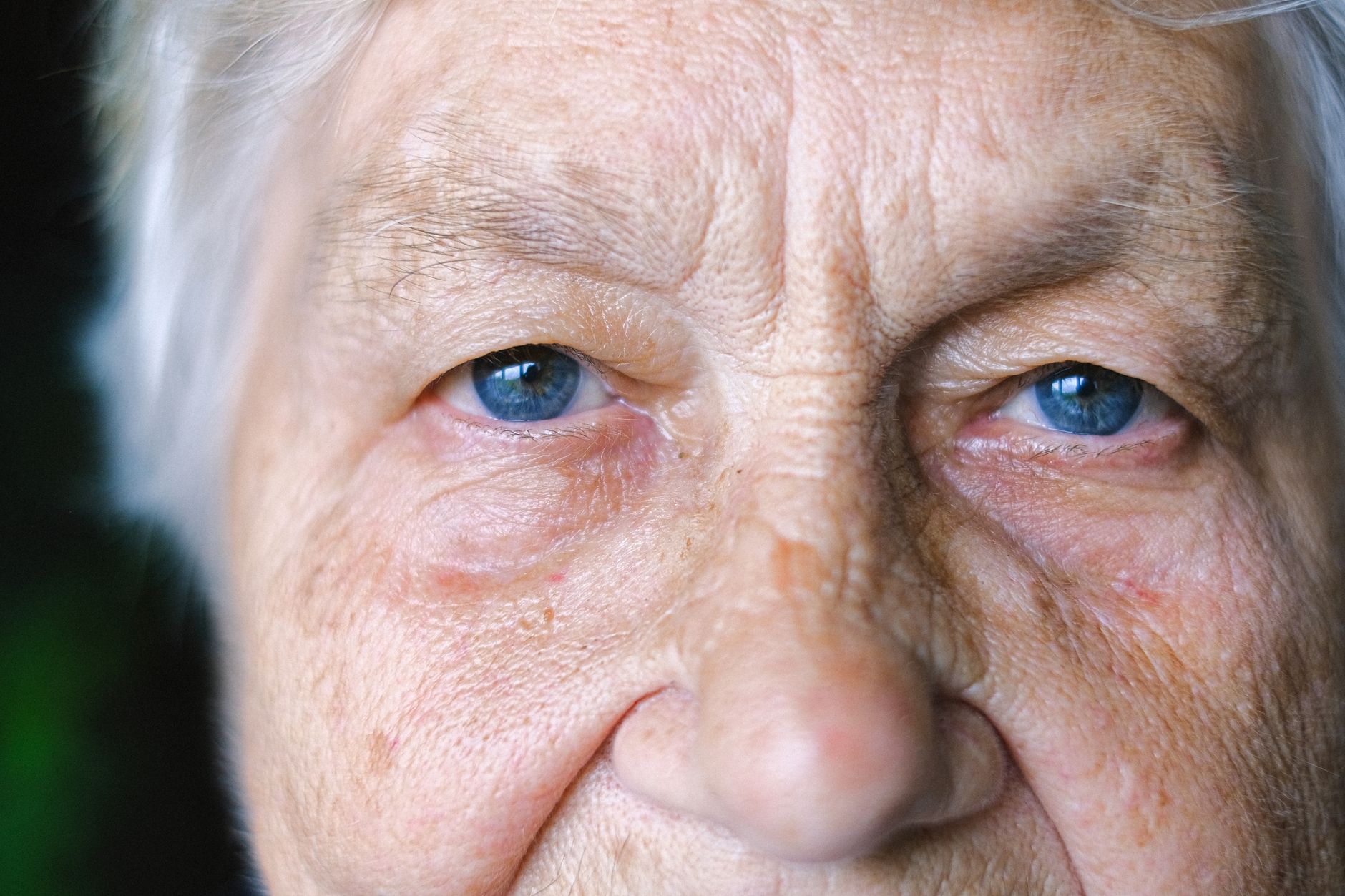
Yes, reduced blinking can be an early sign of Parkinson’s disease. Most people blink 15 to 20 times per minute automatically, a reflex so consistent we barely notice it. In Parkinson’s, this automatic blinking slows down—sometimes to as few as 3 to 8 blinks per minute—because the disease affects the basal ganglia, the brain region that controls automatic movements. A spouse might notice their partner staring without blinking for unusually long stretches, or describe it as an intense, fixed gaze.
This change happens quietly, without pain or obvious discomfort, which is why it’s easy to miss. Reduced blinking is not diagnostic on its own. A single sign is never enough to confirm Parkinson’s. But it often appears alongside other early motor changes like tremor, stiffness, or slowness of movement. For people over 50 experiencing multiple subtle changes in how their body moves, reduced blinking can be an important clue to discuss with a doctor.
Table of Contents
- How Does Parkinson’s Alter Automatic Blinking?
- Understanding the Difference Between Normal and Parkinson’s-Related Blinking
- Why Does Parkinson’s Reduce Blinking Specifically?
- Recognizing Reduced Blinking as a Potential Early Warning
- Other Early Motor Signs That Frequently Occur With Reduced Blinking
- Reduced Blinking as Part of Parkinson’s Facial Expression Changes
- When and How to Discuss Reduced Blinking With a Healthcare Provider
How Does Parkinson’s Alter Automatic Blinking?
Blinking seems simple, but it’s actually one of thousands of automatic movements your brain controls without conscious thought. These reflexive actions—blinking, swallowing, the swing of your arms when you walk—depend on the basal ganglia and adequate dopamine levels. When Parkinson’s damages dopamine-producing neurons, automatic movements become slower or less frequent.
Neurologists call this bradykinesia when it affects voluntary movements, but the same slowing applies to reflexes like blinking. The connection is so consistent that reduced blinking shows up in research as one of many motor signs that cluster together in Parkinson’s. A person with a significantly reduced blink rate often also reports stiffness, walks with shorter steps, or has begun to notice tremor in one hand. The blinking change is rarely the only symptom, which is why doctors look for patterns rather than single signs.
Understanding the Difference Between Normal and Parkinson’s-Related Blinking
A normal blink rate varies by person and situation. You blink more when you’re tired or uncomfortable, and you blink less when you’re concentrating, reading, or driving. Some people naturally blink 12 times per minute, others 25. But Parkinson’s-related blinking is persistently slow, not just occasional or situational.
The key difference: with Parkinson’s, the reduced rate continues even during conversation or everyday activity. One practical limitation when using reduced blinking as a diagnostic clue is that many other conditions affect blinking—thyroid problems, dry eye, medication side effects, or even anxiety can all cause changes in blink rate. A neurologist wouldn’t diagnose Parkinson’s based on blinking alone. They need to see the pattern alongside other signs: a small tremor at rest, difficulty rising from a chair, or a loss of facial expression. Blinking is one piece of a much larger picture.
Why Does Parkinson’s Reduce Blinking Specifically?
The basal ganglia process not only major movements but also these small, habitual actions your brain performs without thinking. Dopamine, the neurotransmitter lost in Parkinson’s, is the brain’s “go” signal for these automatic programs. When dopamine levels drop, the programs slow down or skip steps. Blinking is controlled partly by the superior colliculus, a midbrain structure that coordinates rapid eye and head movements, and the basal ganglia modulate this activity through dopamine signaling.
Research shows that in Parkinson’s, blink rate can drop 40 to 60 percent compared to age-matched healthy people. This isn’t because the eyes or tear ducts are affected—it’s purely a neurological issue. Early-stage patients often blink noticeably less, while advanced patients may blink even less frequently. Some people taking dopamine-replacement medications notice their blink rate returns somewhat toward normal, which supports the dopamine-blinking link.
Recognizing Reduced Blinking as a Potential Early Warning
If someone around you has started to seem like they’re staring—appearing to focus intently on something ordinary, or looking startled even during normal conversation—this could be reduced blinking. One way to informally observe this is to count blinks over one minute during relaxed conversation, though this requires discretion and shouldn’t replace a doctor’s assessment. Another sign: a person might mention that their eyes feel dry or irritated, since less blinking means less tear spreading.
A helpful comparison: imagine someone on a video call or in an intense moment of focus—that’s the kind of fixed gaze you might see in early Parkinson’s, except it happens during everyday activity, not just stressful moments. The person often isn’t aware they’re doing it. Unlike dry eye, which causes discomfort and prompts frequent eye drops, Parkinson’s-related reduced blinking typically doesn’t create obvious symptoms—the person feels fine, they’re simply blinking less.
Other Early Motor Signs That Frequently Occur With Reduced Blinking
Reduced blinking rarely travels alone. It often appears alongside tremor (usually a subtle shaking in one hand at rest), rigidity (stiffness in the neck, shoulders, or limbs), bradykinesia (slow movement), or postural changes (slight stooping or loss of arm swing). Someone might notice difficulty buttoning small buttons, a quieter voice, or handwriting that gets progressively smaller. These motor signs cluster together because they all stem from the same dopamine loss.
Here’s an important warning: the presence of multiple subtle motor changes can feel alarming, but many of these signs are common with aging, stress, or other medical conditions. A person over 60 might notice slightly stiffer shoulders and assume it’s arthritis, then add reduced blinking to the mix and worry it’s Parkinson’s. A neurologist will consider the full clinical picture, perform specific tests, and often wait to see if symptoms progress before confirming a diagnosis. Don’t assume reduced blinking plus one other sign means Parkinson’s—but do bring the pattern to your doctor.
Reduced Blinking as Part of Parkinson’s Facial Expression Changes
Reduced blinking connects to a broader phenomenon called facial hypomimia or the “Parkinson’s mask”—a reduction in facial expression that makes a person appear less animated or emotionally present. Internally, they feel normal; externally, their face shows less change. They blink less, smile with less muscle activation, furrow their brows less, and may have a more neutral expression overall.
This happens because the same dopamine deficiency affecting blinking affects the many small facial muscles that create expression. This change often distresses family members before it distresses the patient. A grown child might feel hurt that their parent seems less responsive or interested in family events, not realizing the flat expression is a neurological symptom, not emotional withdrawal. Doctors include facial hypomimia in their diagnostic checklist for Parkinson’s, partly because it helps confirm that an automatic, emotionally-driven system is being dampened by dopamine loss.
When and How to Discuss Reduced Blinking With a Healthcare Provider
If you’ve noticed persistent reduced blinking in yourself or a loved one—especially if it accompanies other motor changes—mention it at your next primary care visit or bring it to a neurologist’s attention. Describe the change specifically: “They seem to stare without blinking for stretches,” or “My eye doctor says my blink rate is low, and I’ve also noticed my hands feel stiff.” A neurologist may perform a blink-counting test, assess blink reflexes, and look for other signs like tremor or slowness. The timing matters: Parkinson’s symptoms often develop slowly over months or years before diagnosis.
Reduced blinking that appears suddenly over days might signal something else entirely—an infection, stroke, or medication reaction. But reduced blinking that develops gradually, over weeks to months, alongside other subtle motor slowing, is worth investigating. If a neurologist suspects Parkinson’s, they’ll typically follow with imaging or other tests to rule out conditions that mimic Parkinson’s, then watch how symptoms progress over time to confirm the diagnosis.
- —