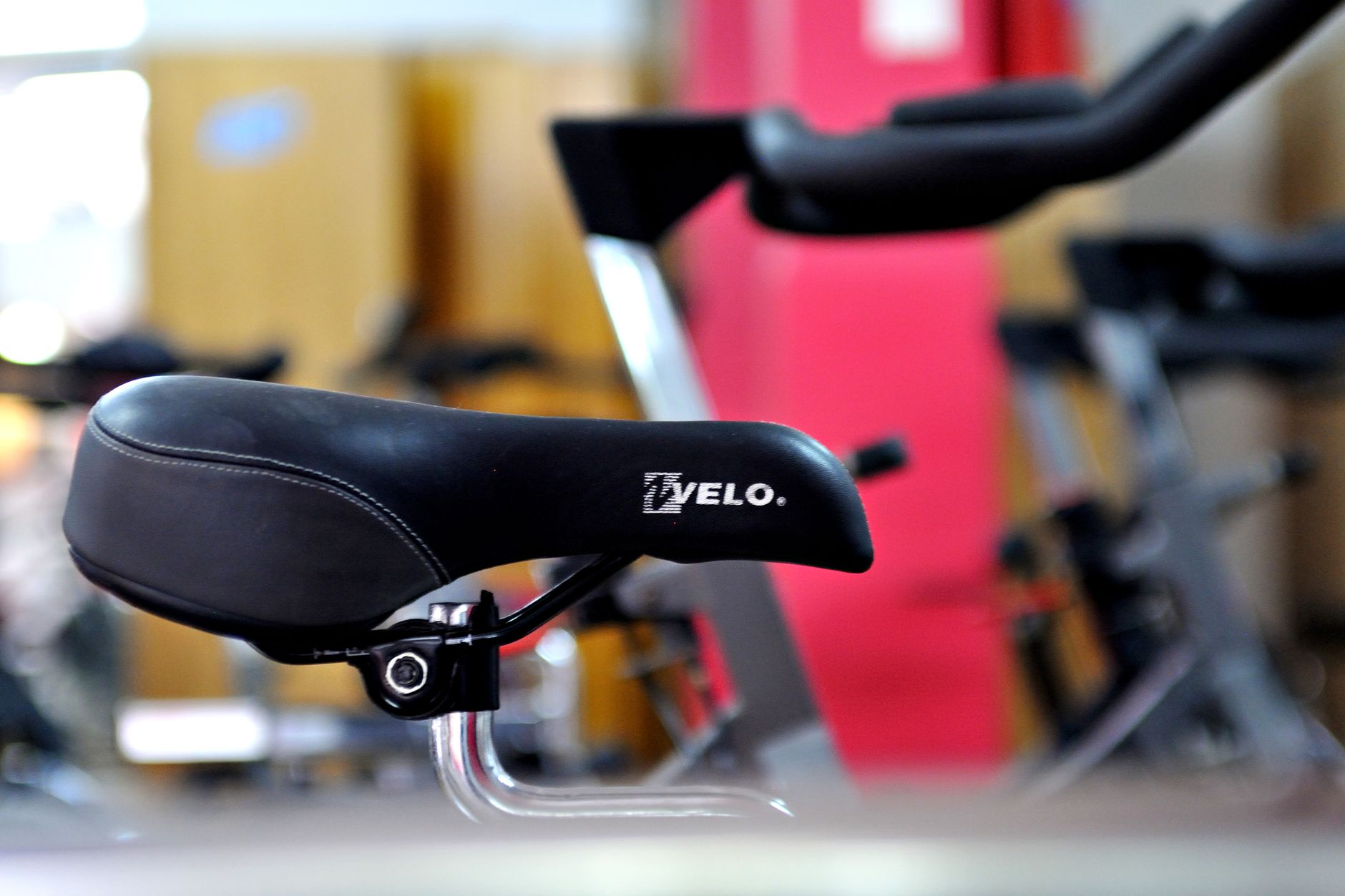
Stationary cycling offers measurable relief from Parkinson’s motor symptoms through a form of exercise that engages large muscle groups while maintaining safety and control. Unlike walking, which can become restricted and unsteady as Parkinson’s progresses, cycling on a stationary bike forces continuous leg movement through a complete circular motion—a neurological pattern that appears to bypass some of the movement hesitation characteristic of the disease. A patient who struggled to initiate walking due to “freezing” episodes might find that pedaling comes more naturally, allowing them to exercise for extended periods without the cognitive burden of starting and stopping movements.
The mechanism works partly through something called forced exercise—the bicycle pedal creates a pacing that the nervous system can follow, similar to how people with Parkinson’s walk more smoothly to the rhythm of music. Beyond the immediate physical benefits, regular stationary cycling activates neural pathways independent of the circuits damaged by Parkinson’s, potentially slowing decline in motor function over time. This is not a cure, but a sustained intervention that caregivers and patients increasingly use as part of comprehensive symptom management.
Table of Contents
- How Does Stationary Cycling Specifically Help Parkinson’s Motor Symptoms?
- The Role of Forced Exercise and Neuroplasticity in Parkinson’s Management
- Cardiovascular and Metabolic Benefits Beyond Motor Symptoms
- Setting Up a Safe and Effective Stationary Cycling Program
- Monitoring Progress and Recognizing When Cycling Alone Is Insufficient
- Combining Stationary Cycling with Physical and Occupational Therapy
- Long-Term Sustainability and the Role of Caregiver Support
How Does Stationary Cycling Specifically Help Parkinson’s Motor Symptoms?
parkinson‘s disease damages dopamine-producing neurons, leaving people struggling with rigidity, tremor, bradykinesia (slow movement), and postural instability. Stationary cycling addresses these problems through forced, rhythmic movement that the body can execute without relying solely on the damaged dopamine system. The pedaling motion requires leg muscles to cycle through extension and flexion repeatedly, which keeps joints mobile and muscles engaged—both critical as Parkinson’s stiffness tends to worsen with inactivity.
Studies have suggested that this type of continuous, paced exercise may enhance the recruitment of alternative motor pathways, allowing the brain to circumvent some of the movement deficits caused by neurodegeneration. The circular nature of pedaling is particularly advantageous because it eliminates the decision-making burden of discrete steps. In walking, each step requires the brain to initiate movement, decide pace, and manage balance—tasks that become cognitively exhausting for Parkinson’s patients. On a stationary bike, the patient pedals in a set motion that becomes almost automatic once initiated, reducing what clinicians call “cognitive load.” This can make longer exercise sessions feasible for people who tire quickly during conventional workouts, and it may explain why some patients report feeling less rigidity and moving more smoothly after cycling sessions.
The Role of Forced Exercise and Neuroplasticity in Parkinson’s Management
Forced exercise—meaning movement driven by an external mechanism like pedaling speed or a treadmill pace—activates different neural circuits than voluntary movement. When a Parkinson’s patient walks at their own pace, they rely heavily on the damaged striatum and other dopamine-dependent regions. But when pedaling a stationary bike with a set cadence, the rhythmic input bypasses some of this damaged circuitry by engaging cerebellar and motor cortex networks that remain relatively intact. Over weeks of consistent cycling, these alternative pathways may strengthen, potentially leading to measurable improvements in motor control even during non-cycling activities.
However, there is an important limitation: the benefits of forced exercise appear to diminish if the cycling is performed passively or at very low intensity. A stationary bike that moves the patient’s legs without active participation—sometimes called passive cycling—shows minimal motor benefit in research. The patient must pedal with effort and maintain a steady cadence for the neuroplastic changes to occur. Additionally, stationary cycling benefits primarily the lower body; upper limb rigidity, tremor in the hands, or neck stiffness require separate interventions like resistance training or occupational therapy. Patients and caregivers sometimes overestimate how much cycling alone can improve overall motor function, leading to disappointment if upper body symptoms remain unchanged.
Cardiovascular and Metabolic Benefits Beyond Motor Symptoms
Parkinson’s disease often leads to reduced physical activity, sedentary behavior, and related cardiovascular deconditioning. stationary cycling, because it is low-impact and accessible to people with varying levels of motor impairment, allows patients to engage in aerobic exercise safely. Regular cycling strengthens the heart, improves circulation, and helps maintain a healthy body weight—all factors that reduce the risk of stroke, heart disease, and metabolic complications that can emerge as Parkinson’s progresses.
The metabolic benefit extends to blood pressure regulation and blood sugar control. Sedentary Parkinson’s patients often develop insulin resistance and hypertension, both common complications of the disease. A patient who cycles for 30 minutes three times per week may not only move better but also stabilize blood sugar levels and reduce medication burden for hypertension. Additionally, maintaining aerobic fitness can improve energy levels and mood, both of which are often diminished in Parkinson’s disease independent of motor symptoms.
Setting Up a Safe and Effective Stationary Cycling Program
An effective stationary cycling program for Parkinson’s patients requires careful attention to bike setup and exercise parameters. The bike should be adjusted so the knee is slightly bent at the bottom of the pedal stroke—full leg extension creates stress on the knee joint, while excessive bending reduces the range of motion and muscular benefit. Seat height and handlebar position should be set to encourage upright posture without straining the back, as Parkinson’s patients often develop forward-stooping posture that can worsen with poor cycling ergonomics. Frequency and duration matter more than intensity for Parkinson’s motor improvement.
Research has suggested that three sessions per week of 30 to 45 minutes at moderate intensity produces measurable motor benefits over 12 to 24 weeks. This is substantially more accessible to most patients than the high-intensity protocols sometimes promoted for general fitness, and it aligns with what people with Parkinson’s can realistically sustain without exhaustion or injury. A patient who cycles twice per week for 20 minutes is likely to gain cardiovascular benefit but may miss the neuroplastic motor improvements that come with more consistent, higher-volume training. The trade-off is between convenience and effectiveness; caregivers must help negotiate this balance based on the patient’s energy levels, disease stage, and schedule.
Monitoring Progress and Recognizing When Cycling Alone Is Insufficient
As Parkinson’s progresses, the motor benefits of stationary cycling may plateau or diminish, particularly if the disease is advancing rapidly or if medication dosing is suboptimal. A patient who experienced marked improvement in the first 6 months might find that benefits stall or that symptoms return to baseline by month 12. This does not mean cycling is failing; rather, it reflects the progressive nature of the underlying neurodegeneration. Continuation of cycling is still warranted for cardiovascular health and to potentially slow further decline, but expectations should be adjusted realistically.
One warning: some patients experience increased tremor, stiffness, or dyskinesia (involuntary writhing movements) when cycling at certain intensities or times of day. If tremor worsens during pedaling, it may indicate that the cycling cadence is too fast or that the patient is cycling during a time of day when medication effectiveness is waning. Adjusting cadence downward or shifting the cycling time to peak medication hours (typically 30 to 60 minutes after taking a dose) can often resolve this. Patients should never force themselves through worsening symptoms; instead, they should communicate changes to their neurologist or therapist to optimize both medication and exercise timing.
Combining Stationary Cycling with Physical and Occupational Therapy
Stationary cycling works best as part of a broader exercise regimen that includes balance training, strength work, and flexibility exercises. A patient who cycles three times per week but does not perform balance exercises remains at high risk for falls—cycling does not improve balance or proprioception, the senses that tell the body where it is in space. Adding a second or third exercise modality, such as tai chi, resistance training with a physical therapist, or gait training, creates a more comprehensive motor intervention.
For example, a patient might cycle on Mondays and Fridays, attend a physical therapy session on Wednesday focused on balance and gait, and practice home exercises on alternate days. Occupational therapists can also help patients perform upper-body and fine motor activities that cycling does not address. Hand exercises, writing practice, or resistance work with the arms and shoulders target the tremor and rigidity in the upper body that often most affects quality of life. The combination approach takes more time and coordination but delivers better overall motor and functional outcomes than cycling alone.
Long-Term Sustainability and the Role of Caregiver Support
One of the strongest predictors of long-term adherence to a stationary cycling program is consistent caregiver support and encouragement. Parkinson’s fatigue and depression—both common—can make it tempting to skip exercise sessions, especially when the cognitive effort of motivating oneself is high.
A caregiver who schedules the cycling time, helps the patient get to the bike, and provides positive reinforcement dramatically increases the likelihood that the patient will sustain the program over months and years. Some patients benefit from cycling while listening to music or audiobooks, a strategy that provides dual cognitive stimulation and makes sessions feel less monotonous. Others find group cycling classes designed for Parkinson’s patients particularly motivating; these specialized programs, increasingly available at hospitals and community centers, offer both the forced-exercise benefit and the social engagement that can lift mood and reinforce commitment.