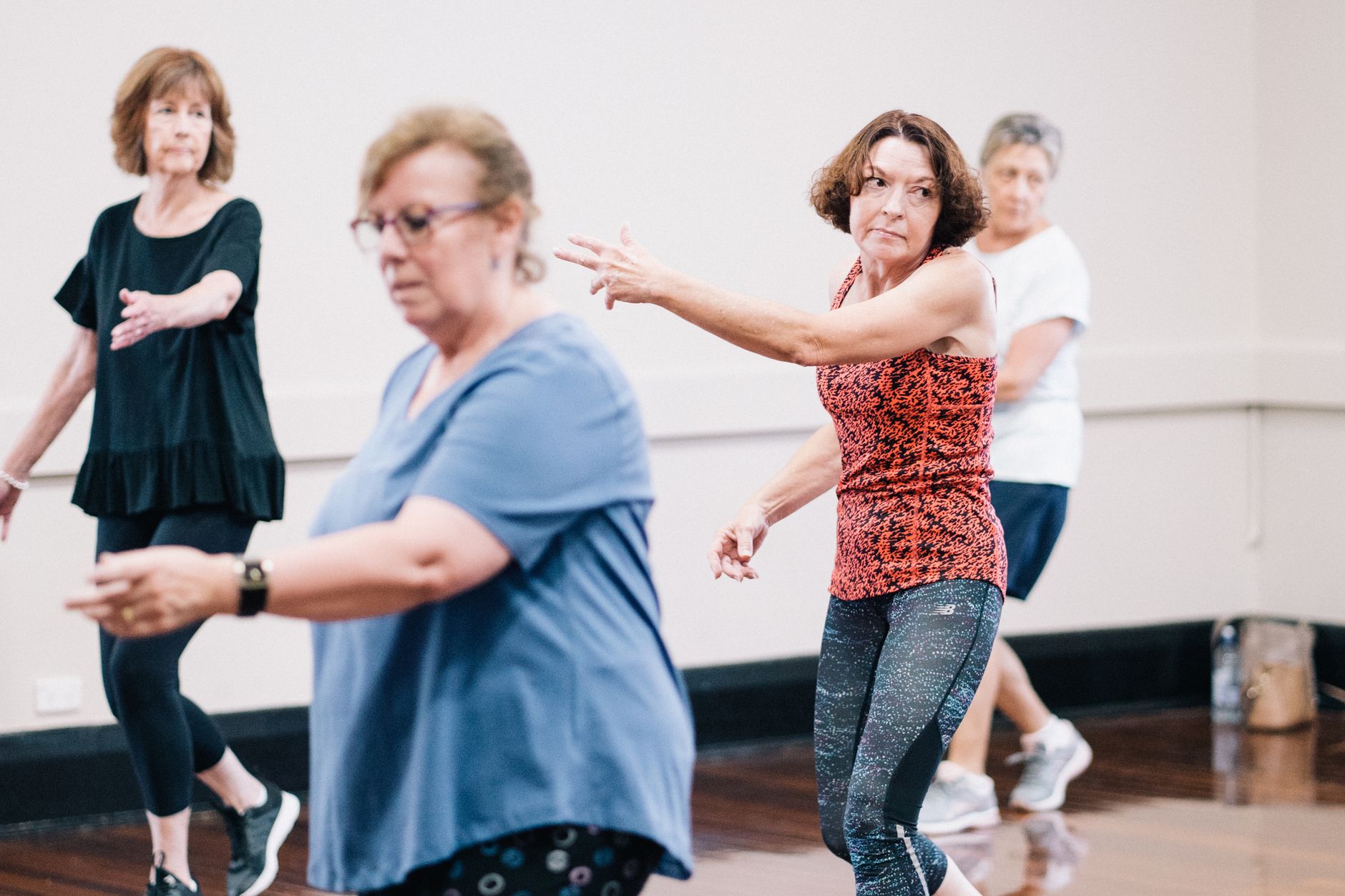
Dance therapy improves core Parkinson’s symptoms—particularly rigidity, gait disturbances, and balance problems—by leveraging rhythmic movement and music to engage the brain’s motor systems in ways that bypass the dopamine-deficient pathways affected by the disease. Community-based programs amplify these benefits beyond what isolated practice can achieve by building consistency, accountability, and social connection into treatment. For example, a person with Parkinson’s who attends a weekly group dance class may notice improvements in walking speed and stride length within weeks, while also reporting increased confidence in daily movement and reduced isolation—outcomes that extend beyond symptom management into quality of life.
The mechanism is rooted in neuroscience: rhythm and music activate alternative neural pathways that help people with Parkinson’s move more fluidly, even when the nigrostriatal dopamine system is compromised. Dance classes taught by instructors trained in Parkinson’s-specific movement work provide real-time correction, encouragement, and adaptation to changing abilities throughout the disease course. Unlike home exercise programs, which people often abandon due to motivation or knowledge gaps, community programs create structure and social pressure—in the positive sense—that keeps people showing up week after week.
Table of Contents
- What Specific Movement Problems Does Dance Therapy Address?
- How Community Programs Deliver Outcomes That Individual Exercise Often Doesn’t
- The Social and Psychological Benefits of Dancing Together
- Getting Started and Building a Sustainable Practice
- Common Obstacles and Realistic Boundaries
- The Hidden Role of Music in Movement and Memory
- Evaluating Long-Term Sustainability and Realistic Expectations
- Frequently Asked Questions
What Specific Movement Problems Does Dance Therapy Address?
Parkinson’s disease triggers several interconnected motor problems: bradykinesia (slow movement), rigidity (stiffness), postural instability, and a distinctive shuffling gait with reduced arm swing. dance therapy targets each of these through repetitive, music-guided movement that forces the brain to reorganize motor commands. When a person with Parkinson’s dances to music with a clear beat, the auditory system essentially provides an external metronome that helps coordinate limbs and torso, often allowing movement that would be difficult if they tried to self-initiate without musical cues. Gait problems respond particularly well to rhythmic dancing. People with Parkinson’s often freeze while walking—a terrifying sudden halt—or develop a shuffle that increases fall risk.
Dance classes that emphasize larger, deliberate steps with arm movements help rewire stepping patterns and restore momentum. A participant who struggles to cross a doorway at home might find that dancing to moderately-paced music unlocks a more normal stride, at least temporarily. This temporary improvement can extend beyond the class if the person practices the movement patterns at home, though consistency matters enormously. Balance and postural control also improve through structured dance, especially when choreography includes weight shifts, reaching movements, and controlled directional changes. However, it is important to note that dance therapy cannot cure the underlying loss of dopamine-producing neurons; it compensates for motor deficits rather than restoring the lost brain function. The benefits are real but require ongoing participation—people who stop attending classes typically see gains fade over weeks to months.
How Community Programs Deliver Outcomes That Individual Exercise Often Doesn’t
Group dance programs create accountability and social motivation that home exercise videos or physical therapy appointments alone rarely match. A person might skip a home exercise routine because they are tired or feeling depressed, but showing up to a class with peers creates a commitment and a routine. The instructor sees the participant every week, can track progress, and catches movement errors in real time. Peers see each other’s efforts and improvements, which builds encouragement and normalizes the experience of living with a progressive neurological disease. Community-based programs also offer flexibility and progression that adapt to the heterogeneity of Parkinson’s. Someone newly diagnosed moves differently from someone with advanced disease; some people are still working, while others are retired; some have tremor, others have rigidity as their dominant symptom.
Skilled instructors modify movements on the fly, offering easier and harder versions of choreography so everyone in the room—whether stage one or stage three—can participate meaningfully. This adaptability is difficult to achieve with a fixed video or a standard physical therapy protocol. A significant limitation of community programs is accessibility and availability. Many regions have few or no dance therapy classes specifically designed for Parkinson’s. Cost can be a barrier; while some programs are subsidized or free through community centers or nonprofit organizations, others charge per class or require memberships. Additionally, people with advanced Parkinson’s, cognitive decline, or severe balance problems may find group classes overwhelming or unsafe, requiring more individualized instruction or home-based modifications.
The Social and Psychological Benefits of Dancing Together
Beyond motor symptoms, people with Parkinson’s often report depression, anxiety, and social isolation—all of which worsen disease perception and quality of life. Dancing in a group setting directly addresses these psychological dimensions. Participants form friendships, share experiences, and receive implicit validation that they are not alone. The act of moving together, following music, and occasionally laughing at missteps creates moments of joy and connection that many people with chronic illness describe as restorative. Research and anecdotal reports from people attending Parkinson’s-specific dance classes consistently highlight reduced feelings of depression and improved confidence after several weeks of participation.
One person might describe feeling “alive” during class for the first time in months; another might explain that having a weekly commitment gave structure and purpose back to their week. These psychological shifts matter medically, too: depression itself worsens motor symptoms and medication response, so lifting mood through community engagement indirectly improves overall Parkinson’s management. However, the social benefits are not automatic or guaranteed. A person who attends class but does not connect with peers, or who feels embarrassed or discouraged by their own limitations compared to others, may experience increased anxiety rather than relief. Instructors and program coordinators play a crucial role in creating an emotionally safe environment and facilitating peer support.
Getting Started and Building a Sustainable Practice
Finding a suitable dance therapy program requires some investigation. Parkinson’s-specific programs, usually run by neurological physiotherapists, dance educators, or community health organizations, are ideal because instructors understand disease-specific challenges and can modify safely. Some programs are designed around standardized curricula, like the “Dance for PD” model developed in partnership with Brooklyn Parkinson Group, which has trained instructors across many cities. Others are led by individual instructors or studios that have adapted general dance classes for people with Parkinson’s. When evaluating a program, ask whether the instructor has experience with Parkinson’s, whether movements are adaptable, and whether the class size is small enough for individual attention.
Some classes are better suited to people with mild motor symptoms; others welcome walkers, use chairs, or modify choreography for severe rigidity. The “right” program is one the person will actually attend consistently—so practical factors like location, time, cost, and class atmosphere matter as much as the credentials of the instructor. Starting slowly is important. Someone new to dance or new to structured classes might attend once a week for four to six weeks to feel the benefits without overwhelming the nervous system. Increasing to twice weekly, if feasible, often yields better outcomes than sporadic attendance. The tradeoff is commitment: the benefits of dance therapy depend on ongoing participation, unlike a surgical intervention or a medication adjustment that produces lasting change without further input from the person.
Common Obstacles and Realistic Boundaries
Many people with Parkinson’s harbor self-doubt about their ability to dance or move expressively. Someone who was never a dancer, or who now feels self-conscious about tremor or rigidity, may resist joining a class out of fear of being judged or falling. This resistance is understandable but often based on misconception—Parkinson’s dance classes explicitly normalize variability in movement and emphasize participation over perfection. Nevertheless, a person’s confidence and willingness to try is a prerequisite, and no class can force someone to show up. Medication timing affects performance and safety in dance classes. Someone experiencing “off” periods—times when dopamine replacement medication wears thin—might struggle with balance, rigidity, or freezing during class.
Instructors should know about medication schedules so they can anticipate and modify accordingly. Additionally, some people experience dyskinesia (involuntary movements) as a side effect of long-term dopamine medication, which can make choreography confusing or risky. Coordinating class attendance with medication timing, in consultation with the person’s neurologist, improves safety and benefit. Advanced Parkinson’s, severe cognitive decline, or severe balance impairment may make group classes unsafe or inaccessible. Some people require one-on-one or small-group instruction, or need to skip dance therapy entirely in favor of more tailored physical therapy. Being honest about these limitations prevents injury and frustration.
📨 Get Free Parkinson's Guides Alerts
Free · No spam · Unsubscribe anytime
The Hidden Role of Music in Movement and Memory
Music does more than provide rhythm; it engages memory systems, emotional centers, and motor planning regions of the brain in ways that speech or visual cues alone cannot. A person with Parkinson’s who struggles to walk might move fluidly to a familiar song, because the melody and lyrics activate different neural networks than those required to self-initiate movement.
This is why songs that were meaningful to someone earlier in life—music they danced to in youth, or grew up hearing—often work especially well in dance therapy. Some programs let people choose music or incorporate songs with personal significance, deepening the engagement and meaning of the movement practice. This personalization also aids retention and motivation: a person is more likely to practice dance steps at home if the music is familiar and emotionally resonant.
Evaluating Long-Term Sustainability and Realistic Expectations
Dance therapy is neither a cure nor a substitute for medication and medical management, but rather a complementary tool that addresses specific motor and psychological challenges. People should continue taking their prescribed Parkinson’s medications, attend neurological appointments, and pursue other aspects of care while incorporating dance therapy.
The evidence supports benefit for gait, balance, mobility, and mood, but individual results vary based on disease stage, consistency of practice, and personal response. The sustainability question is practical: Can someone afford and access the program long-term? Will they remain motivated as the disease progresses? Dance classes designed for early-stage Parkinson’s may become unsuitable in later stages, requiring transition to modified or one-on-one instruction. Planning for this progression, and viewing dance therapy as a flexible tool that adapts over time rather than a fixed intervention, helps manage expectations and maintain engagement throughout the disease course.
- —
Frequently Asked Questions
Is dance therapy suitable for everyone with Parkinson’s disease?
Dance therapy works best for people with mild to moderate motor symptoms and the physical ability to stand and move safely. People with advanced disease, severe balance problems, or cognitive decline may need modified instruction or home-based adaptation. Always consult your neurologist before starting a new physical activity.
How often should someone attend dance classes to see improvement?
Most people report noticeable improvements in gait and balance within four to six weeks of weekly attendance. Twice-weekly classes generally produce faster results, but consistency matters more than frequency—one reliable class per week outperforms sporadic attendance.
Can dance therapy reduce medication needs?
Dance therapy does not reduce the need for dopamine medication, but it can complement medication by addressing symptoms that remain despite medication and by improving overall quality of life and mood. Never adjust medications without consulting your neurologist.
What should someone do if they cannot find a Parkinson’s-specific dance program nearby?
Adapted dance classes for seniors or low-impact dance classes can provide some benefit, but they lack disease-specific modifications. Home practice using online videos designed for Parkinson’s, or working with a physical therapist familiar with Parkinson’s, are reasonable alternatives to group classes.
Is dance therapy helpful for early-stage or newly diagnosed Parkinson’s?
Yes; early-stage Parkinson’s often responds well to dance therapy because motor capacity is relatively preserved. Starting early can build movement habits and community connections that sustain benefit as the disease progresses.
How much does a typical Parkinson’s dance program cost?
Costs vary widely. Some programs through community centers or nonprofit organizations are free or low-cost; others charge $10–$30 per class or $50–$100 per month for memberships. Some insurance plans may cover physical therapy-based movement programs if prescribed by a neurologist.
You Might Also Like
- Dance therapy programs improve Parkinson’s patient quality of life and mobility
- Community Dance Programs Help Parkinson’s Patients Regain Movement
- Parkinson’s Research Trials: Disease Modification Now Outpaces Symptom Relief Approach