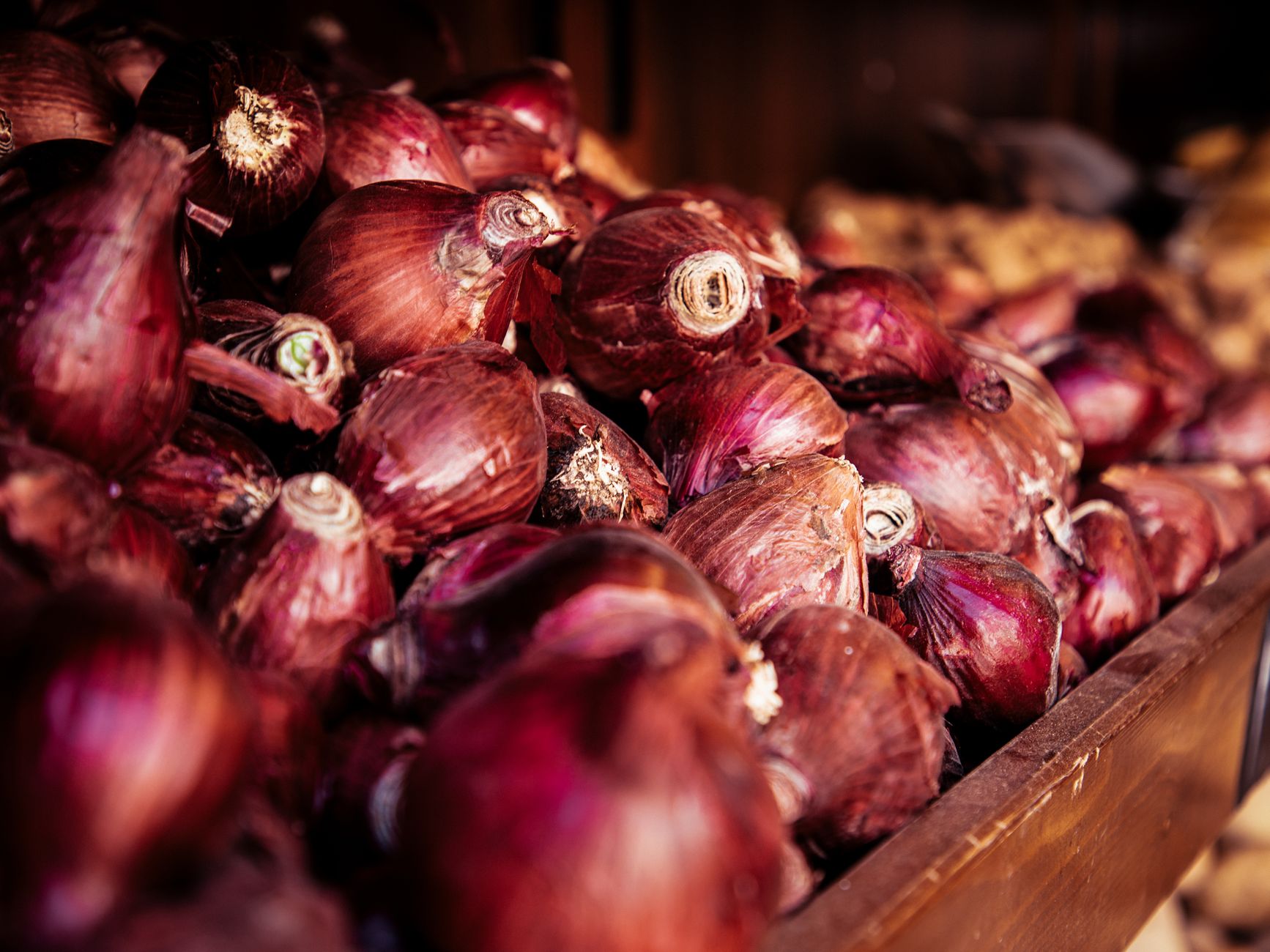
Raw onion has not been shown to improve insulin sensitivity, and no study has tested it in people with Parkinson's disease. The one randomized trial that fed people measured amounts of raw red onion for two months found no significant change in insulin resistance at all.
That matters for Parkinson's readers because insulin resistance — the body's reduced response to its own insulin — is genuinely common in Parkinson's, and usually invisible on a standard blood sugar test. The condition is worth taking seriously. The onion is not the tool that fixes it.
Medical information disclaimer: This article is for general educational purposes only and does not provide medical advice, diagnosis, or treatment. Always consult a physician or other qualified health professional about symptoms, medications, tests, or treatment decisions.
Table of Contents
- What the onion trial actually measured
- Why quercetin does not rescue the claim
- The acute glucose study, and what it does not prove
- The insulin resistance behind the question is real
- What the Parkinson's-specific evidence covers
- Sensible next steps
- Frequently Asked Questions
What the onion trial actually measured
The closest thing to a direct test comes from a randomized controlled trial in 53 non-diabetic overweight and obese women with polycystic ovary syndrome, a group chosen precisely because insulin resistance is typical in it. One group ate 40-60 g of raw red onion twice a day; the other ate 10-15 g twice a day. The high-onion group was eating roughly a medium onion daily, in raw form, for eight weeks. After two months, the published trial reported that HOMA-IR — the standard calculated index of insulin resistance from fasting glucose and insulin — did not change significantly within either group or between them.
The authors concluded that raw red onion could not significantly improve insulin resistance markers. The companion analysis found one signal worth naming honestly: the percentage change in adiponectin, a hormone secreted by fat tissue that is associated with better insulin handling, differed between groups, falling 11.9% on the low dose and rising 48.3% on the high dose. But in the same analysis, mean serum adiponectin, leptin and hs-CRP did not change significantly over the two months. A difference in percentage change without a change in the measured level is a hint about mechanism, not a treatment effect.
Why quercetin does not rescue the claim
Most onion-and-insulin arguments route through quercetin, the flavonoid that gives onion skin and flesh much of its antioxidant reputation. The supplement trials are far larger and far better pooled than anything on the vegetable itself, so they are the fair test of the underlying idea. A 2019 meta-analysis of nine randomized trials found quercetin supplementation did not change fasting glucose, HOMA-IR or HbA1c. Insulin fell only in subgroups — people under 45, and doses of at least 500 mg a day.
That dose threshold is the detail that ends the onion argument: 500 mg of isolated quercetin is far above what any culinary serving of onion delivers. A 2023 umbrella review went a level higher, pooling five meta-analyses of randomized trials. It found quercetin did not affect fasting plasma glucose or HOMA-IR, with only insulin level reduced by a small margin (weighted mean difference -1.07, 95% CI -1.9 to -0.1), and rated the certainty of that single finding very low to moderate. Two independent layers of evidence converge on the same answer, which is why one promising-sounding mechanism paper should not move your diet.
The acute glucose study, and what it does not prove
There is a real study behind the stronger claims circulating online. A small 2010 preliminary study by Taj Eldin and colleagues gave a single 100 g dose of crude red onion to type 1 and type 2 diabetic patients and reported fasting blood glucose about 40 mg/dl lower at four hours, and a blunted glucose-tolerance-test rise of 159 mg/dl versus 55 mg/dl for water. Read carefully, that study measured a single meal's effect on blood sugar in people already diagnosed with diabetes. Insulin sensitivity is a different endpoint: it describes how well your cells respond to insulin over weeks and months, not how high one glucose curve climbs after one dose.
Lowering a post-meal glucose spike is a useful thing for a food to do. It is not the same as making the body more insulin-sensitive, and the eight-week trial that looked for exactly that found nothing. So the two results are not in conflict. One acute meal effect in diabetic patients, no sustained change in insulin resistance over two months, and no effect on HOMA-IR in the pooled quercetin trials is a coherent picture.
📨 Get Free Parkinson's Guides Alerts
Free · No spam · Unsubscribe anytime
The insulin resistance behind the question is real
The reason this question keeps getting asked is sound. Researchers at Cedars-Sinai tested 154 non-diabetic Parkinson's patients with fasting glucose and insulin and found insulin resistance by HOMA index to be common and largely undetected despite normal blood sugar. Their 2018 paper in the *Journal of Parkinson's Disease* found BMI was the only significant predictor, with no correlation to cognitive scores on the MoCA, quality of life on the PDQ-39, or non-motor symptoms on the NMSQ.
The group's earlier cohort of 93 Parkinson's patients gives the figure that reached press coverage: 49 of 84 non-diabetic patients, or 58%, had an abnormal HOMA-IR, ranging from 2.01 to 9.92. That is the source of the widely repeated "nearly two-thirds" line. The practical consequence is a testing problem, not a diet problem. Because fasting glucose and often HbA1c read normal in these patients, the Parkinson's Foundation's summary notes that people with Parkinson's may need a more sensitive insulin-based test — fasting insulin, or the HOMA calculation derived from it — to detect the resistance at all.
What the Parkinson's-specific evidence covers
No clinical trial has tested onion or quercetin in Parkinson's patients with insulin or glucose endpoints. The Parkinson's quercetin literature is entirely preclinical: work in 6-OHDA-lesioned rats and PC12 cells, where quercetin improved mitochondrial quality control and reduced alpha-synuclein accumulation. Those are cell and rodent findings about neurodegeneration, not human findings about blood sugar. It also pays to know how targeting insulin signalling has fared when properly tested in Parkinson's.
Exenatide-PD3 randomized 194 patients for 96 weeks to exenatide, a diabetes drug repurposed for Parkinson's on exactly this rationale. In the results published in *The Lancet* in February 2025, off-medication MDS-UPDRS part III scores worsened 5.7 points on exenatide versus 4.5 on placebo (p=0.47), with no difference in non-motor measures or DaT-SPECT imaging. A potent pharmaceutical acting directly on this pathway did not slow Parkinson's progression. That sets a realistic ceiling on what a vegetable should be expected to do for the disease itself.
Sensible next steps
If the insulin resistance question is what brought you here, the useful actions are diagnostic and conventional: One caution on reading new claims in this area: a study showing quercetin protects dopaminergic cells in a rat is answering a question about nerve damage, not about your insulin. Check which endpoint a headline is actually describing before changing anything.
- Ask your neurologist or primary care doctor about a fasting insulin level alongside fasting glucose, since normal glucose and HbA1c will not rule insulin resistance out.
- Mention weight and BMI specifically — it was the only significant predictor in the 154-patient study, which makes it the one modifiable variable the data actually points at.
- Keep eating onion if you like onion. Nothing in this evidence base suggests harm, and the acute glucose finding is mildly encouraging for post-meal blood sugar.
- Do not substitute onion, or a quercetin supplement, for diabetes screening or prescribed treatment if you already have a diagnosis.
- Treat high-dose quercetin supplements as a separate decision from food, and raise them with your doctor first — Parkinson's medication regimens are sensitive to interactions, and the doses that moved insulin in trials were 500 mg a day or more.
Frequently Asked Questions
Does cooked onion work better than raw?
The trials that exist tested raw red onion and isolated quercetin, and neither improved HOMA-IR. There is no evidence that cooking changes that answer in either direction.
How much onion was the "high" dose in the trial?
Two servings a day of 40-60 g each, for eight weeks — roughly a medium onion daily, eaten raw. HOMA-IR still did not change significantly.
Should I ask for an insulin test even if my blood sugar is fine?
It is a reasonable question to raise. In the Cedars-Sinai work the resistance was common and largely undetected precisely because blood sugar read normal, which is why a fasting insulin or HOMA-based measure is the one that finds it.
You Might Also Like
- Parkinson’s Protein Redistribution Diet: Purpose and Cautions
- Parkinson’s Biomarker Studies: Does Detecting a Protein Explain What Caused the Disease?
- My Partner With Parkinson’s Needs More Help Than They Want to Admit