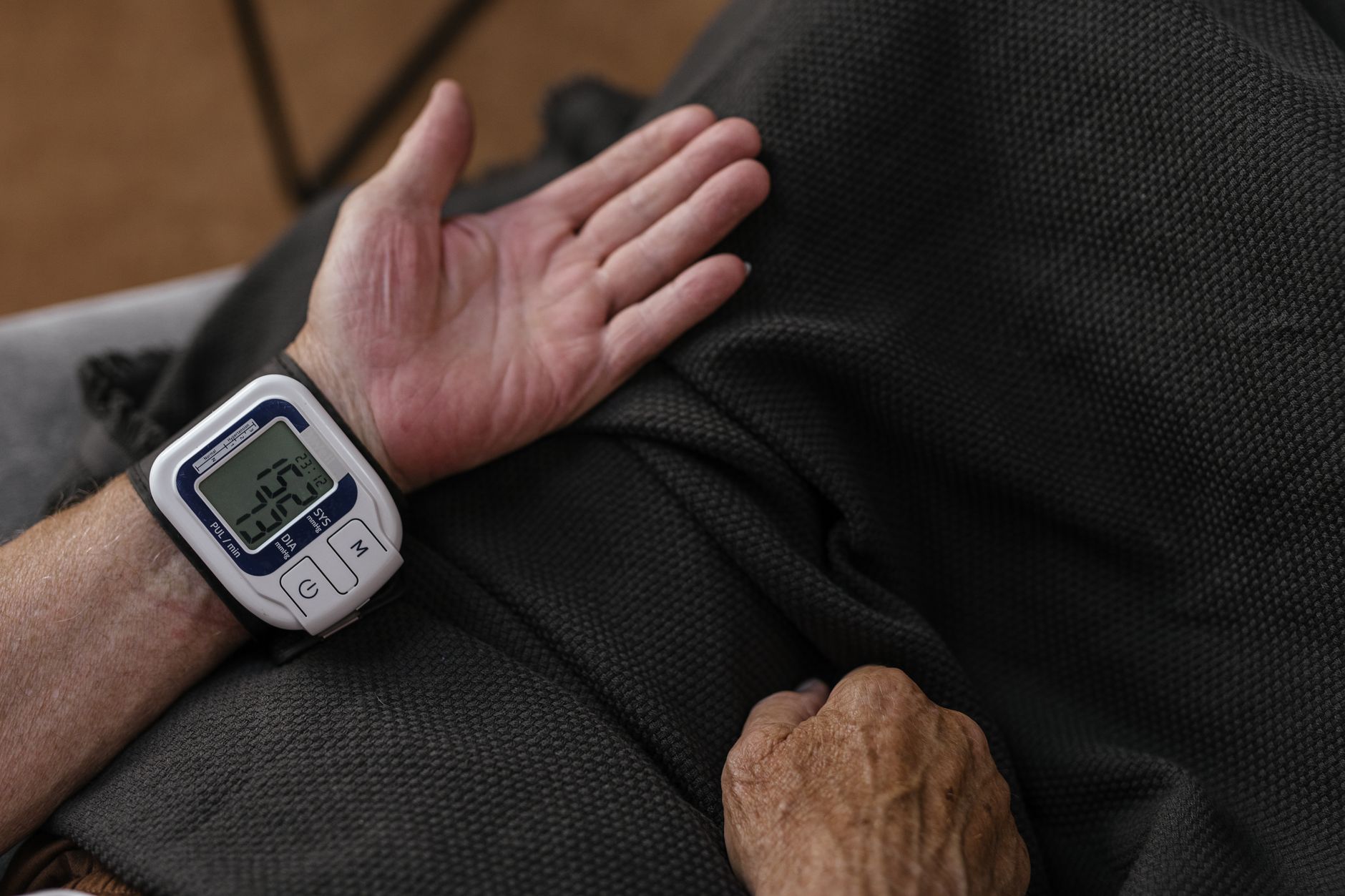
Supine hypertension in Parkinson’s disease represents a paradoxical and clinically significant problem: patients experience elevated blood pressure while lying down, yet often develop severe orthostatic hypotension—dangerously low blood pressure upon standing. This apparent contradiction exists because Parkinson’s disease damages the autonomic nervous system, the network responsible for automatic regulation of blood pressure, heart rate, and other vital functions. A patient with advanced Parkinson’s might record a blood pressure reading of 160/90 mmHg while resting in bed, then experience a sharp drop to 95/55 mmHg within seconds of standing up, creating a dangerous mismatch between body positions that increases fall risk and cardiac complications.
The connection between these two conditions reflects a fundamental breakdown in the autonomic system’s ability to redistribute blood volume and adjust vascular resistance. Rather than operating as separate problems, supine hypertension and orthostatic hypotension are often two expressions of the same underlying autonomic dysfunction. Understanding this relationship is essential for caregivers and patients, as treating one condition without accounting for the other can paradoxically worsen both.
Table of Contents
- Why Does Parkinson’s Disease Cause Both Supine Hypertension and Orthostatic Hypotension?
- The Autonomic Damage Underlying the Blood Pressure Paradox
- How Blood Pressure Dysregulation Creates a Vicious Cycle
- Monitoring and Recognizing the Pattern
- Treatment Challenges and the Risk of Unintended Harm
- Medication Interactions and Parkinson’s-Specific Considerations
- The Role of Supine Positioning and Sleep in Blood Pressure Management
- Frequently Asked Questions
Why Does Parkinson’s Disease Cause Both Supine Hypertension and Orthostatic Hypotension?
parkinson‘s disease progressively destroys neurons that produce dopamine, particularly in regions of the midbrain. But the damage extends far beyond motor control. The disease also affects the autonomic nervous system, specifically neurons in the locus coeruleus and other brainstem regions that release norepinephrine, a chemical messenger controlling blood vessel constriction and heart rate. In healthy people, lying down causes blood to pool naturally in the torso and head; the autonomic nervous system responds by reducing blood vessel constriction and heart rate to maintain stable pressure.
When a person stands, the same system rapidly constricts blood vessels and increases heart rate to push blood upward against gravity, maintaining brain and heart perfusion. In Parkinson’s disease with autonomic involvement, this regulation becomes erratic. While lying flat, the system may fail to properly relax blood vessels and may retain excessive fluid in the blood vessels near the torso, resulting in elevated resting pressure. The same dysfunctional system then struggles to constrict vessels quickly when the person stands, causing blood to pool in the legs and a precipitous drop in brain perfusion. A person might lie in bed with a systolic pressure in the 150s, stand up, and within 30 seconds find their pressure has plummeted to the 80s or lower, creating dizziness, syncope (fainting), or falls.
The Autonomic Damage Underlying the Blood Pressure Paradox
The autonomic nervous system in Parkinson’s disease doesn’t simply weaken—it becomes dysregulated. Pathological protein deposits called Lewy bodies accumulate in autonomic ganglia and peripheral nerve fibers, disrupting the normal sequence of sympathetic (activating) and parasympathetic (calming) signals. This means the system may over-respond in some moments and under-respond in others, rather than maintaining smooth control. The result is that blood pressure regulation becomes unpredictable, and the two seemingly opposite conditions—high pressure lying down and low pressure standing—can coexist in the same patient on the same day.
One major limitation of current understanding is that not all Parkinson’s patients develop both conditions. Some may have isolated orthostatic hypotension, others may have supine hypertension alone, and the severity of one does not predict the severity of the other. This variability reflects the heterogeneous nature of Parkinson’s disease itself—the pathology is not uniform across patients, and the extent of autonomic involvement differs significantly. A 72-year-old woman with moderate motor symptoms might have severe orthostatic hypotension but normal resting blood pressure, while a 65-year-old man with similar motor severity experiences pronounced supine hypertension with only mild orthostatic drops. This unpredictability underscores why individualized monitoring is essential.
How Blood Pressure Dysregulation Creates a Vicious Cycle
The relationship between supine hypertension and orthostatic hypotension is not purely coincidental—the two conditions can actively reinforce each other. When the body experiences chronically elevated resting blood pressure, the kidneys may respond by excreting excess sodium and water to normalize overall blood volume. This compensatory mechanism, while protective in isolation, becomes problematic when combined with the orthostatic component: the reduced blood volume that results from kidney compensation makes it even harder for blood vessels to maintain adequate pressure when the person stands. Conversely, some medications used to treat orthostatic hypotension can worsen supine hypertension, particularly if dosing is high or if the medication is taken close to bedtime.
Another example of this cycle involves medication timing. A patient taking fludrocortisone (a drug that increases sodium and water retention to boost blood volume) might successfully reduce orthostatic symptoms during the day, only to experience worsening supine hypertension at night. If the dose is too high, the patient suffers from elevated nighttime pressure that disrupts sleep and increases cardiovascular strain. If the dose is reduced to control supine values, orthostatic symptoms return during waking hours. This tension between treating supine and standing blood pressures illustrates why Parkinson’s autonomic dysfunction is among the most challenging aspects of disease management.
Monitoring and Recognizing the Pattern
Proper diagnosis requires more than a single office blood pressure reading. Clinical assessment of both supine and orthostatic blood pressure is essential for identifying this dual problem. A standard test involves measuring blood pressure while the patient lies flat for at least five minutes, then again within one to three minutes of standing. Some clinicians use tilt-table testing or continuous ambulatory blood pressure monitoring to capture the full 24-hour pattern, including daytime, standing, and nighttime readings.
Without this systematic measurement, supine hypertension may be missed because patients often focus on dizziness and fall risk from orthostatic drops, while the elevated resting pressure accumulates silently. For caregivers at home, recognizing the pattern means noting both morning blood pressures (typically highest when lying down) and post-positional readings (measured shortly after standing). A patient who reports feeling faint or unsteady when rising in the morning, yet has elevated readings on an automatic home cuff taken before getting out of bed, likely has this dual pathology. Keeping a brief log with timestamps—supine readings in the morning, orthostatic readings a few minutes after standing, and evening readings—helps identify trends that inform medical decision-making. One limitation is that home blood pressure monitors can be imprecise, especially at the extremes of high and low values, so clinical confirmation remains important.
Treatment Challenges and the Risk of Unintended Harm
Managing supine hypertension while preventing orthostatic hypotension presents a clinical paradox that has no perfect solution. Standard antihypertensive medications, such as ACE inhibitors or calcium channel blockers, lower blood pressure throughout the day and night, which can dangerously worsen orthostatic symptoms. Patients treated primarily for supine hypertension often experience syncope, falls, or myocardial infarction during periods of standing or activity. Conversely, therapies specifically designed to prevent orthostatic hypotension—such as fludrocortisone or midodrine—typically raise resting blood pressure and can significantly worsen supine hypertension, increasing the risk of stroke or left ventricular hypertrophy over time.
A major limitation of current treatment approaches is the lack of a medication or intervention that selectively raises blood pressure when standing without also raising it when lying down. Some centers employ position-specific strategies, such as recommending compression stockings and water loading for daytime orthostatic prevention, combined with careful medication timing and evening dose reductions to minimize nighttime hypertension. However, these multimodal approaches require careful coordination and frequent adjustment, and they do not work equally well for all patients. The risk of under-treatment or over-correction is high, particularly in older patients with concurrent cardiovascular disease or kidney dysfunction.
📨 Get Free Parkinson's Guides Alerts
Free · No spam · Unsubscribe anytime
Medication Interactions and Parkinson’s-Specific Considerations
The medications used to treat Parkinson’s motor symptoms—particularly dopamine agonists like pramipexole and ropinirole—can independently affect blood pressure regulation, adding another layer of complexity. Some patients experience worsening orthostatic symptoms when dopamine agonist doses are increased, while others may see improvements. Levodopa itself can cause acute blood pressure fluctuations, with some patients experiencing brief surges in pressure during dose peaks and relative drops between doses.
When managing supine hypertension and orthostatic hypotension in a Parkinson’s patient, clinicians must consider not only dedicated cardiovascular medications but also the blood pressure effects of antiparkinson drugs. An older patient with Parkinson’s taking levodopa three times daily, pramipexole for motor control, and a standard blood pressure medication might experience a complex pattern: elevated pressure in the early morning before the first levodopa dose, fluctuating pressure during midday as doses peak and wane, and orthostatic symptoms when standing shortly after medication ingestion (when blood pools) or late in the afternoon (when drug effects decline and autonomic dysregulation is most pronounced). Adjusting one medication to improve one symptom often requires compensatory changes in another.
The Role of Supine Positioning and Sleep in Blood Pressure Management
Head-of-bed elevation is one simple, evidence-informed strategy for managing supine hypertension without pharmacologic intervention. Elevating the head and upper torso 30 to 45 degrees during sleep reduces hydrostatic pressure in the head and neck, potentially lowering central blood pressure without compromising orthostatic tolerance during the day. This approach mirrors gravitational therapy used in some sleep centers. However, for a Parkinson’s patient with tremor, rigidity, or balance impairment, maintaining an elevated sleeping position can be challenging—pillows may shift, side rails or wedges may not be tolerated, and the supine position itself may worsen other Parkinson’s symptoms such as sleep apnea or early-morning bradykinesia.
A patient attempting to use a wedge pillow might slide down during the night, negating the benefit, or find that the inclined position triggers difficulty rolling or getting out of bed. Nighttime dipping—the normal 10- to 20-percent reduction in blood pressure that occurs during sleep—is often blunted or absent in Parkinson’s disease, meaning that evening and nocturnal blood pressures remain elevated despite the usual nighttime drop. This sustained hypertension during sleep hours contributes to end-organ damage and sleep fragmentation. When combined with orthostatic problems upon waking, the patient faces a compounded challenge: they may suffer from uncontrolled nighttime pressure, then experience severe dizziness and fall risk when rising in the morning. Careful timing of medications, positioning strategies, and selective use of shorter-acting blood pressure medications in the evening are among the few tools available for addressing this specific pattern.
Frequently Asked Questions
Can supine hypertension exist without orthostatic hypotension in Parkinson’s patients?
Yes. Some Parkinson’s patients experience isolated supine hypertension or isolated orthostatic hypotension, depending on which autonomic functions are most affected by the disease. Both conditions reflect autonomic dysfunction, but they do not always occur together or with equal severity.
Why do standard blood pressure medications sometimes make orthostatic symptoms worse?
Standard antihypertensive drugs lower blood pressure throughout the day and night. In a Parkinson’s patient whose autonomic system is already impaired, this global reduction can push standing blood pressure dangerously low, increasing syncope and fall risk.
How often should blood pressure be monitored in Parkinson’s patients with these conditions?
At minimum, blood pressure should be measured in both supine and standing positions during clinical visits. Patients with known dual pathology may benefit from home monitoring with both morning (supine) and post-standing readings several times weekly, or more frequently if medications are being adjusted.
Is elevated nighttime blood pressure in Parkinson’s a sign of worse overall disease?
Loss of normal nighttime blood pressure dipping is associated with more severe autonomic involvement and increased cardiovascular risk, but it does not necessarily indicate worse motor symptoms or faster disease progression.
Can physical therapies or positioning alone manage both supine hypertension and orthostatic hypotension?
Physical strategies such as head-of-bed elevation, compression stockings, and gradual positional changes can help, but they rarely resolve both conditions completely. Most patients require some combination of positional measures, medication adjustment, and close monitoring.
Should patients with Parkinson’s limit water or sodium intake to help with blood pressure control?
Restricting sodium or water can worsen orthostatic hypotension by reducing blood volume. Management should be individualized; some patients benefit from adequate hydration and sodium intake to maintain blood volume for standing, while supine hypertension is managed through other means.
You Might Also Like
- Parkinson’s Clinical Trials Begin After FDA Approval for Developer 2026
- Six million dollar grant accelerates Parkinson’s diagnosis methods research initiative
- Phase 1b/2a trial enrollment complete for Parkinson’s experimental treatment RNDP-001