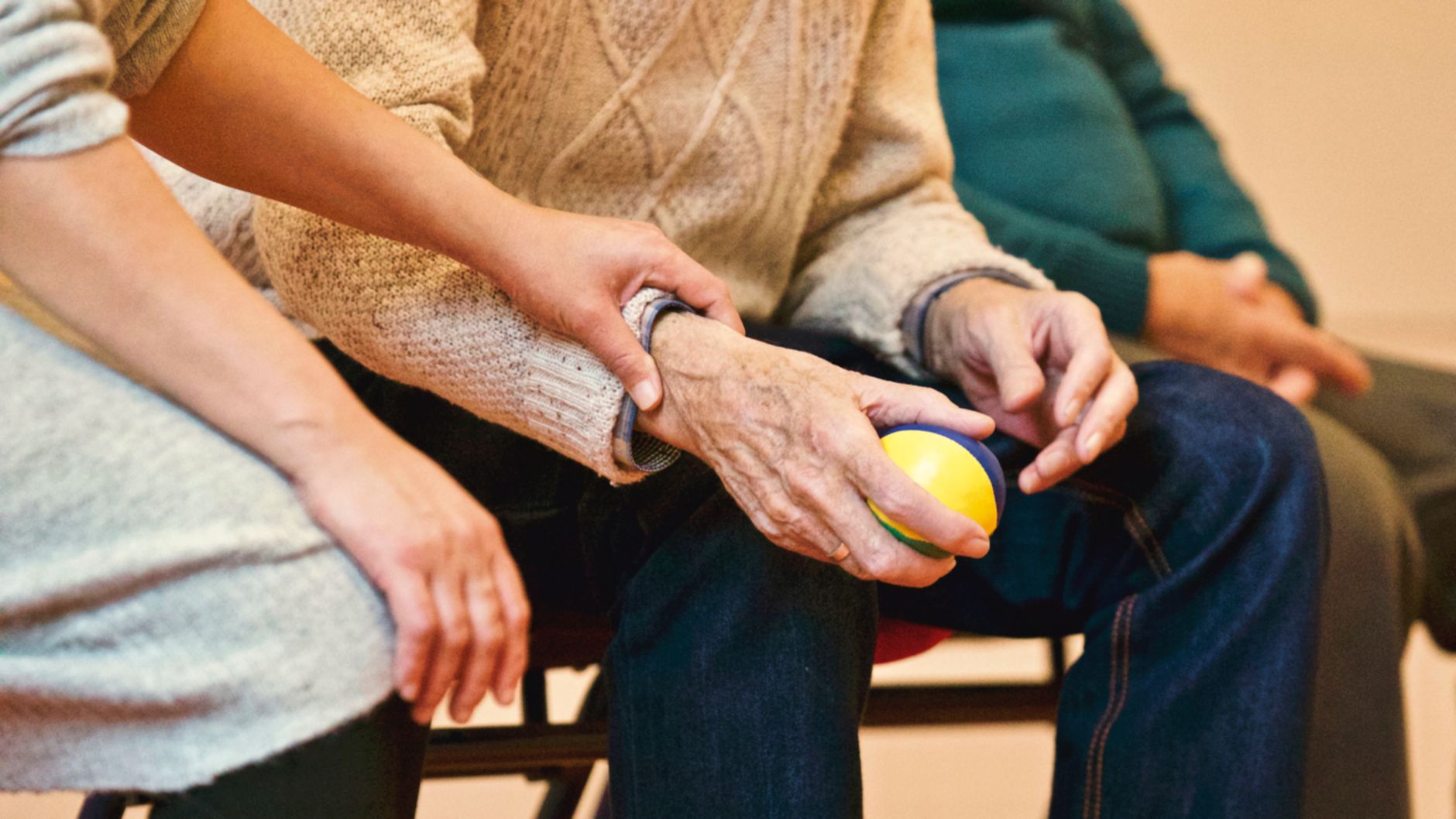
Stress makes Parkinson’s tremor worse because the same nervous system that floods your body with adrenaline during a tense moment also amplifies the involuntary shaking that Parkinson’s produces. When you feel anxious, frightened, or overwhelmed, your body releases stress hormones like adrenaline and cortisol. These chemicals raise muscle tension, speed up the heart, and heighten the activity of the sympathetic nervous system. In a person with Parkinson’s, whose dopamine-deprived motor circuits are already struggling to keep movement smooth and steady, that surge acts like fuel on a fire. The resting tremor that may be barely noticeable in a calm living room can become dramatic the moment a doctor walks in or a phone rings with bad news. Many people with Parkinson’s describe this firsthand.
A retired teacher might report that her hand is nearly still while she reads quietly at home, yet it shakes so violently at a crowded family dinner that she struggles to hold a fork. Nothing about her disease changed in those few hours. What changed was her stress level, and the tremor responded almost instantly. This is one of the clearest examples of how Parkinson’s symptoms are not fixed numbers but values that move up and down with emotional and physical state. Understanding this connection matters because it is one of the few tremor triggers a person can actually influence. You cannot reverse the loss of dopamine neurons, but you can learn to recognize stress, lower it, and reduce its grip on your movement. The sections below explain the biology behind the link, where it shows up in daily life, and what genuinely helps.
Table of Contents
- Why does stress make Parkinson’s tremor worse?
- How stress hormones and the nervous system amplify shaking
- Everyday situations that trigger stress-related tremor
- Practical ways to reduce stress and calm tremor
- Common mistakes and limitations to watch for
- How anxiety and depression fit into the tremor picture
- Why tremor often vanishes during focused, calm activity
- Frequently Asked Questions
Why does stress make Parkinson’s tremor worse?
The core reason is that Parkinson’s tremor is generated by faulty brain circuits that are extremely sensitive to arousal. In Parkinson’s, the loss of dopamine-producing cells in the substantia nigra disrupts the basal ganglia, the brain’s movement-control hub. This leaves abnormal rhythmic signals that produce the classic resting tremor. When stress activates the sympathetic nervous system, it increases the overall “gain” on these signals, making the existing tremor oscillations larger and faster. Adrenaline plays a direct role here. Even in people without Parkinson’s, adrenaline can cause a fine physiological tremor, which is why your hands shake a little when you are nervous before public speaking.
In someone with Parkinson’s, this adrenaline-driven tremor stacks on top of the Parkinsonian tremor already present. The two combine, and the result is shaking that looks and feels far more severe. Compare it to a guitar string that is already vibrating: pluck it harder, and the same string produces a much bigger movement. This is also why tremor often disappears during sleep and deep relaxation, when sympathetic activity is at its lowest, and why it spikes during a stressful event. The tremor was never gone; it was simply turned down. Stress turns the volume back up.
How stress hormones and the nervous system amplify shaking
When the brain perceives a threat, the hypothalamic-pituitary-adrenal axis and the sympathetic nervous system trigger the fight-or-flight response. Heart rate climbs, blood pressure rises, muscles tighten, and the body prepares for action. For movement that is already impaired, this state of heightened muscle tension and neural excitement makes smooth motor control harder. The rigidity common in Parkinson’s can worsen alongside the tremor, so a person may feel both shakier and stiffer at the same time. There is an important limitation to keep in mind: stress reduction helps tremor, but it is not a cure and it does not stop disease progression. Some people mistakenly believe that if they could just stay calm, their Parkinson’s would stay mild.
That is not how the disease works. The underlying neurodegeneration continues regardless of mood. Stress management reduces the day-to-day amplification of symptoms; it does not protect dopamine neurons or replace medication. Treating stress as a substitute for proper neurological care is a real risk that can lead people to delay effective treatment. Chronic stress carries its own warning. Long-term elevated cortisol is linked to poor sleep, fatigue, and depression, all of which are common in Parkinson’s and all of which can make motor symptoms feel worse. A person caught in a cycle of stress, bad sleep, and worsening tremor may find each problem feeding the next.
Everyday situations that trigger stress-related tremor
Some of the most reliable tremor triggers are ordinary social and emotional moments. Medical appointments are a classic example. Many patients notice that their tremor worsens dramatically in the waiting room and examination office, a phenomenon sometimes called “white coat” worsening. A neurologist may even see a more severe tremor than the patient experiences at home, which can complicate how the disease is rated during a visit. Public attention is another powerful trigger.
Eating in a restaurant, signing a credit card receipt at a checkout counter, or speaking up in a meeting can all spike tremor precisely because the person feels watched. One man with early Parkinson’s described being able to carry a full cup of coffee across his kitchen with no trouble, then spilling it the moment a coworker glanced at his hand in the office break room. The fear of visible shaking creates the stress that makes the shaking worse, a frustrating self-reinforcing loop. Emotional events count too. Arguments, financial worry, grief, and even positive excitement like a wedding or a grandchild’s visit can all increase tremor. The nervous system does not distinguish neatly between “good” stress and “bad” stress; both raise arousal, and both can shake the hands.
Practical ways to reduce stress and calm tremor
Several stress-reduction approaches can meaningfully lessen tremor in the moment and over time. Slow, deliberate breathing is the simplest and most portable. Taking long exhales activates the parasympathetic nervous system, the counterweight to fight-or-flight, and can take the edge off a tremor within a minute or two. Regular practices such as mindfulness meditation, gentle yoga, tai chi, and progressive muscle relaxation have been shown to lower baseline stress, and many people with Parkinson’s report calmer hands as a result. There is a tradeoff worth weighing between these calming techniques and medication-based approaches.
Breathing and mindfulness are free, carry no side effects, and can be used anywhere, but they require practice and they will not flatten a severe tremor on their own. Anti-anxiety medications or beta-blockers, by contrast, can blunt the adrenaline response more forcefully, but they come with side effects, possible drowsiness, and interactions with Parkinson’s drugs. Most movement disorder specialists favor starting with the low-risk behavioral tools and adding medication only when stress and anxiety are significant enough to justify it. Exercise deserves special mention because it works on both fronts. Regular physical activity lowers chronic stress hormones and improves mood, while also supporting motor function more broadly. A brisk daily walk does more for tremor stability over months than any single relaxation session does in an afternoon, though it does not deliver the instant relief that a few slow breaths can during an acute spike.
Common mistakes and limitations to watch for
A frequent mistake is trying to suppress the tremor through sheer willpower, which usually backfires. Consciously fighting the shake tends to increase muscle tension and frustration, both of which raise arousal and make the tremor larger. Patients often find that the harder they try to hold a hand still in front of others, the worse it gets. The more effective response is to acknowledge the tremor, relax the limb, and let the stress pass rather than wrestling with it. Another limitation involves caffeine and stimulants. Coffee, energy drinks, and certain over-the-counter cold medicines can mimic and magnify the adrenaline response, worsening tremor in some people.
This does not mean everyone must give up coffee, but someone whose tremor flares in the morning should consider whether their caffeine intake is contributing. The effect varies from person to person, so it is worth testing carefully rather than assuming. Finally, be cautious about confusing stress-worsened tremor with disease progression. A bad few weeks at work or a family crisis can make tremor noticeably worse, leading a patient to fear their Parkinson’s is advancing rapidly. Often the tremor settles again once the stressful period ends. Reporting these patterns to a neurologist matters, because adjusting medication based on a temporary stress spike could lead to overtreatment.
How anxiety and depression fit into the tremor picture
Anxiety and depression are not just emotional side effects of Parkinson’s; they are part of the disease itself, tied to the same chemical changes in the brain. Up to 40 percent of people with Parkinson’s experience clinically significant anxiety, and this anxiety directly feeds tremor through the stress pathways already described. Treating the anxiety, whether through therapy, medication, or both, frequently improves the tremor as a secondary benefit.
A concrete example: a woman whose tremor had been steadily worsening was found to have untreated anxiety driving much of the change. After starting cognitive behavioral therapy and addressing her sleep, her daytime tremor became noticeably more manageable, even though her core Parkinson’s medication stayed the same. The shaking that looked like disease progression was substantially stress in disguise.
Why tremor often vanishes during focused, calm activity
One of the most telling features of Parkinson’s tremor is how it can disappear when a person is absorbed in a calm, purposeful task. Many patients notice their hands go still while playing a familiar piece on the piano, knitting, or gardening, only for the tremor to return when they stop and feel self-conscious again.
This happens because focused, relaxed engagement lowers arousal and occupies the motor system in a steady, practiced way. Clinicians sometimes use this to their advantage during examinations, asking a patient to perform mental math or count backward to bring out a tremor, since concentration on an unrelated task can unmask shaking that the patient was unconsciously holding in check. The flip side is just as real: a guitarist with Parkinson’s reported that his resting tremor stopped entirely the moment his fingers found the fretboard, a steady calm that lasted as long as the music did.
Frequently Asked Questions
Does stress cause Parkinson’s disease?
No. Stress does not cause Parkinson’s, which results from the loss of dopamine-producing brain cells. However, stress can clearly make existing tremor and other symptoms temporarily worse.
Can reducing stress replace my Parkinson’s medication?
No. Stress reduction can lessen the amplification of tremor, but it does not slow the disease or replace dopamine-based medication. Never stop prescribed treatment in favor of relaxation alone.
Why is my tremor worse at the doctor’s office than at home?
The stress and self-consciousness of a medical visit raise adrenaline, which magnifies tremor. This common effect can make your shaking appear more severe during the appointment than in daily life.
Does caffeine make Parkinson’s tremor worse?
It can. Caffeine stimulates the same adrenaline-driven response as stress and may worsen tremor in some people, though the effect varies. Testing your own response is more useful than a blanket rule.
Why does my tremor stop when I’m focused on a task?
Calm, absorbing activities lower arousal and engage the motor system steadily, which often quiets the resting tremor. The shaking typically returns once you stop and become self-aware again.