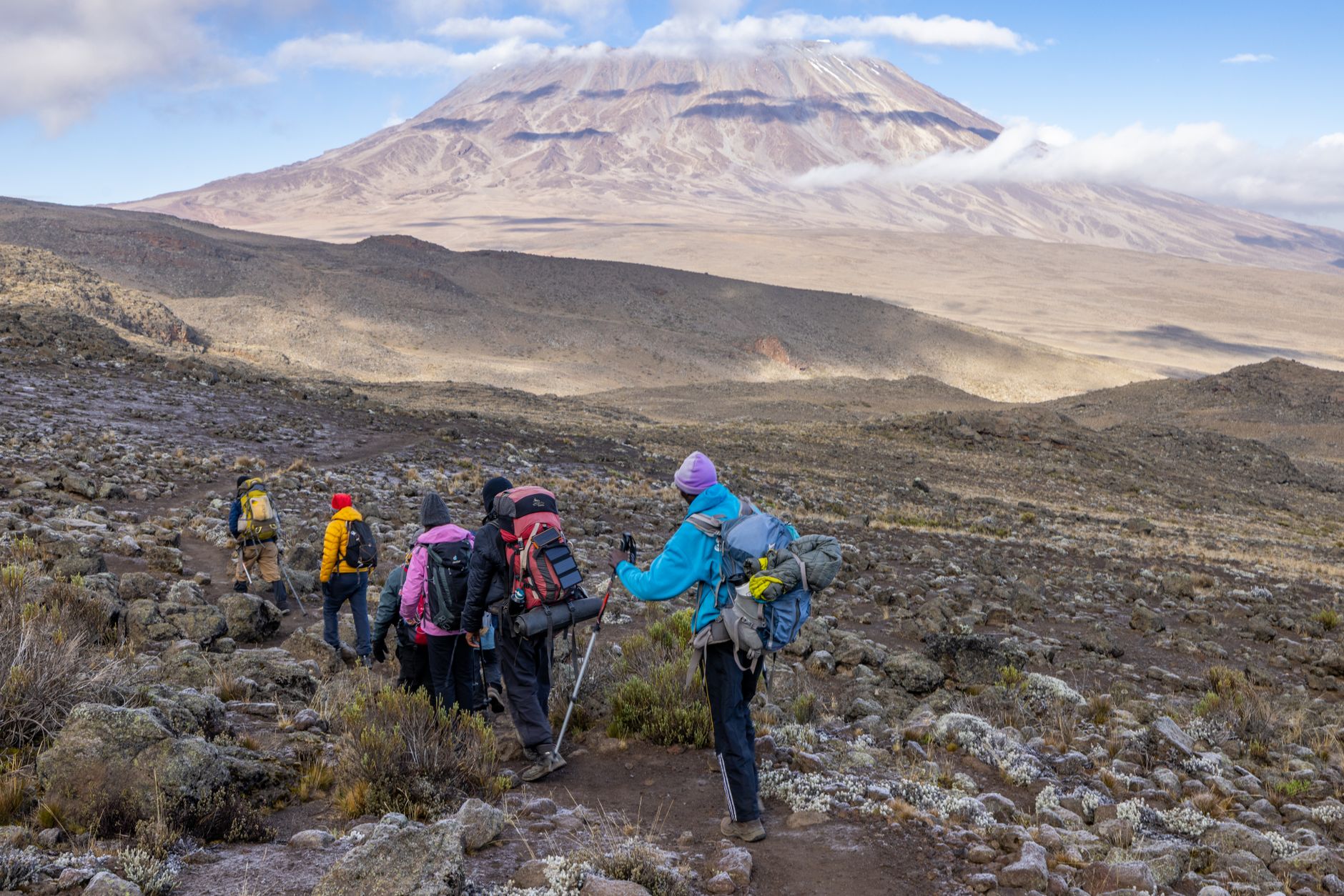
A father and daughter proved that Parkinson’s disease doesn’t have to stop someone from pursuing ambitious physical goals. Despite the father’s Parkinson’s diagnosis, the two successfully climbed Mount Kilimanjaro together—demonstrating that with proper planning, family support, and medical guidance, people living with this neurodegenerative condition can undertake significant physical challenges.
Their achievement highlights an often-overlooked reality: Parkinson’s limits activity levels, but it doesn’t necessarily eliminate the possibility of extraordinary accomplishments. The climb required careful management of symptoms like tremor, rigidity, and balance problems that characterize Parkinson’s disease. The pair’s journey shows how physical exertion can be compatible with the condition, provided the person receives adequate medical clearance and adjusts their approach to accommodate motor and non-motor symptoms that fluctuate throughout the day.
Table of Contents
- Can People with Parkinson’s Successfully Undertake Strenuous Physical Challenges?
- Managing Parkinson’s Symptoms at High Altitude
- The Critical Role of Family Support
- Training and Preparation Strategies for High-Altitude Climbing with Parkinson’s
- Common Climbing Complications for People with Parkinson’s
- Medical Supervision and Safety Protocols
- The Psychological and Physical Benefits of Pursuing Ambitious Goals
Can People with Parkinson’s Successfully Undertake Strenuous Physical Challenges?
Physical activity is increasingly recognized as beneficial for people with Parkinson’s disease, potentially slowing symptom progression and improving quality of life. However, strenuous activities like climbing a 19,341-foot mountain present specific challenges. The condition affects movement, coordination, balance, and endurance—all critical for high-altitude trekking.
tremor makes gripping walking poles more difficult, rigidity causes fatigue to accumulate faster, and postural instability increases the risk of falls on uneven terrain. Yet the evidence suggests that appropriately supervised physical activity, even demanding activity, is not contraindicated for people with Parkinson’s in early to mid stages. The key difference from typical climbers is that someone with Parkinson’s must plan extensively, move at a slower pace, and have real-time medical support available. A father-daughter team attempting Kilimanjaro would need to ensure the climber’s medications were taken on schedule at altitude, where the body’s response to dopamine replacement changes due to reduced oxygen.
Managing Parkinson’s Symptoms at High Altitude
One significant limitation of high-altitude climbing with Parkinson’s is that the disease’s motor symptoms often worsen as physical exertion increases and medication levels fluctuate. At elevation, the body absorbs medication differently, and the added stress of climbing can accelerate tremor or rigidity. Fatigue—a non-motor symptom affecting up to 50 percent of people with Parkinson’s—intensifies at altitude when oxygen is scarce, potentially making each step feel exponentially harder. The climb also demands careful timing of medication doses.
Parkinson’s medications must be taken consistently, ideally at intervals suited to the medication type. On a multi-day climb, the schedule becomes complicated by changing sleep patterns, reduced appetite, and the body’s altered drug absorption. A person taking a long-acting dopamine agonist experiences different symptom control than someone on immediate-release carbidopa-levodopa taken four times daily. A warning for anyone considering similar endeavors: high altitude can trigger or worsen both motor and non-motor complications, including medication-induced dyskinesias (involuntary movements) or freezing episodes where the body temporarily won’t respond to movement commands. Medical supervision during such climbs is not optional but essential.
The Critical Role of Family Support
The decision to climb Kilimanjaro as a father-daughter team highlights how family involvement transforms the feasibility of ambitious goals. A climbing companion can monitor symptoms in real time, adjust the pace based on how the climber is moving that day, and provide immediate assistance if balance problems occur or a fall happens. This partnership differs fundamentally from a typical guided climb where guides may not understand Parkinson’s-specific needs.
Family support extends beyond physical assistance. Emotional encouragement helps someone with Parkinson’s push through fatigue and doubt, while a trusted companion understands the person’s personality and history, not just their symptoms. A daughter climbing with her father knows when tremor is mild enough that he can grip tightly and when rigidity is limiting his stride—nuances a professional guide without Parkinson’s experience might miss.
Training and Preparation Strategies for High-Altitude Climbing with Parkinson’s
Someone with Parkinson’s preparing for a climb of this magnitude would need a training plan that spans months, not weeks. The training should focus on building leg strength to compensate for rigidity, improving balance through targeted exercises, and developing cardiovascular endurance. Many people with Parkinson’s benefit from physical therapy during this preparation phase, as a therapist can identify movement patterns that increase fall risk and address them before the climb.
A practical comparison: an unaffected climber might train for Kilimanjaro over 3 to 4 months with weekend hikes and gym work. A person with Parkinson’s might require 6 to 12 months of preparation, with additional emphasis on consistency. Missing training days due to medication adjustments or symptom flare-ups is common, so the training plan must build in flexibility. Timing training sessions when medication levels are optimal—typically 1 to 2 hours after taking doses—maximizes what the climber can achieve during workouts.
Common Climbing Complications for People with Parkinson’s
Freezing of gait—a sudden inability to initiate or continue walking—represents one of the most dangerous complications on a mountain climb. It can occur unpredictably, especially during transitions (like stepping over rocks) or when the climber is concentrating on the terrain. If freezing happens on a steep section, the risk of falling is significant. Similarly, postural instability means the climber’s body may not self-correct if they stumble, making a misstep far more dangerous than it would be for someone without Parkinson’s.
Sleep disturbance at altitude compounds these problems. Many people with Parkinson’s already experience insomnia or fragmented sleep; high altitude further disrupts sleep quality through reduced oxygen and the altitude itself. Poor sleep worsens all motor symptoms the next day—tremor becomes more pronounced, movement slows, and balance deteriorates. The climb schedule must therefore include rest days not just for acclimatization but specifically for symptom management.
Medical Supervision and Safety Protocols
A responsible climb like this would require advance consultation with the person’s neurologist and primary care physician. The climber would need medical clearance, blood work to ensure no contraindicated conditions exist, and a clear list of what symptoms warrant descent. Arranging for medical support on the mountain—whether through a professional guide trained in Parkinson’s recognition or portable medical equipment—is a crucial safety step that many ambitious climbers overlook.
Carrying backup medications in multiple locations is essential. If a backpack is lost or medications degrade due to temperature changes, having reserve doses in a day pack or with the climbing companion prevents a medical crisis mid-climb. Anyone with Parkinson’s on a remote trek should also carry written information about their condition and current medications, since rescue personnel or local doctors may not have that information otherwise.
The Psychological and Physical Benefits of Pursuing Ambitious Goals
Beyond the immediate accomplishment, attempting and completing a challenging physical goal while living with a progressive neurological condition creates profound psychological benefits. Many people with Parkinson’s experience depression or anxiety as the condition progresses; a major achievement directly counters the narrative that the disease inevitably limits life. The experience of succeeding together—father and daughter reaching a summit—also strengthens the relationship and creates a shared memory that can sustain both through future health challenges.
From a physical standpoint, the training and exertion may slow the rate at which some Parkinson’s symptoms progress, though this effect varies among individuals. The cardiovascular fitness gained during such preparation provides lasting benefits. Even more importantly, proving to oneself that strenuous physical challenge remains possible can inspire sustained engagement in exercise and activity—the most evidence-backed intervention available for slowing Parkinson’s progression outside of medication.
- —