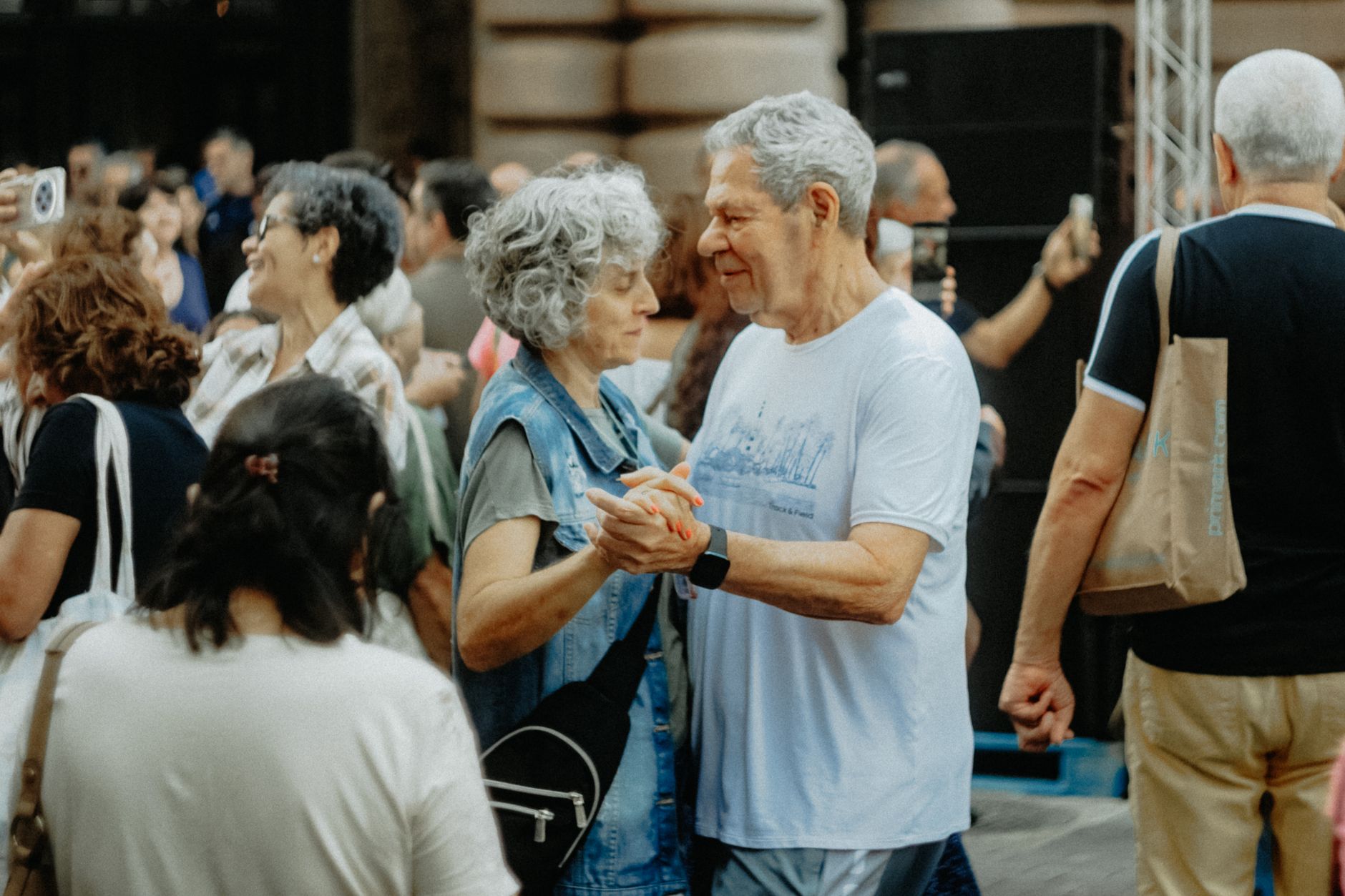
Community dance programs offer Parkinson’s patients a way to work on movement, balance, and coordination in a social setting that feels more like recreation than therapy. Unlike traditional exercise classes, dance engages the brain’s rhythmic and motor systems simultaneously, potentially helping people with Parkinson’s move more fluidly and with greater confidence. These programs range from specialized classes designed specifically for Parkinson’s to mainstream dance studios that welcome participants of all abilities, creating environments where people can pursue movement on their own terms rather than in isolation.
Dance addresses several core challenges in Parkinson’s disease. Many patients experience slowness of movement, stiffness, difficulty initiating steps, and reduced balance—all issues that dance practice can target. The combination of music, structured movement patterns, and peer interaction creates a multisensory experience that engages different brain pathways than medication alone, sometimes producing improvements that extend beyond the class itself.
Table of Contents
- How Dance Engages Movement Pathways in Parkinson’s Disease
- Finding and Evaluating Community Dance Programs
- The Social and Psychological Dimensions of Dance
- Practical Considerations for Getting Started
- Challenges and Realistic Expectations
- Evidence and Ongoing Research
- Integrating Dance with Other Treatments
- Frequently Asked Questions
How Dance Engages Movement Pathways in Parkinson’s Disease
Dance works differently in the Parkinson’s brain than conventional exercise. The rhythmic, predictable nature of music and choreography can bypass some of the motor-control difficulties that characterize the disease. When people with Parkinson’s move to external rhythm—a beat, a musical phrase, or a partner’s movement—they often move more smoothly and with less hesitation than when initiating movement on their own. This phenomenon, called rhythmic cueing, is one reason dance can be especially helpful where other activities might not be. The cognitive engagement is equally important.
Dance requires attention to music, to other dancers, to your own body position, and to the choreography itself. This multitasking demand activates multiple brain regions, potentially strengthening neural networks affected by Parkinson’s. A person who struggles to walk in a straight line on their own may find they can navigate a dance pattern more successfully because their brain is focused outward rather than inward on the effort of movement. Balance and postural control improve through dance practice in ways that matter for daily life. Dance classes emphasize weight shifting, turning, and maintaining posture while moving—exactly the skills that deteriorate in Parkinson’s and that lead to falls. Regular practice in a supported environment means patients practice these risky movements repeatedly, building confidence and muscle memory.
Finding and Evaluating Community Dance Programs
Not all dance programs are equally suitable for Parkinson’s patients. Some classes are designed specifically for the disease, with instructors trained in Parkinson’s motor symptoms and how to modify movements appropriately. Others are mainstream classes—ballet, contemporary, salsa—that welcome people with various abilities but lack specialized adaptation. There are trade-offs: specialized Parkinson’s classes often have smaller groups and instructors who understand fatigue patterns and medication timing, but they may be less available geographically. Mainstream classes offer more variety and social integration with non-Parkinson’s dancers, but require self-advocacy and may lack appropriate modifications. Cost and accessibility are real barriers.
Specialized Parkinson’s dance programs are sometimes subsidized by nonprofits or offered through hospitals and research centers, making them more affordable. Others operate independently and may be expensive. Transportation can be another obstacle; some programs offer on-site parking or partner with local medical centers that are easier to reach than neighborhood dance studios. Quality matters significantly. An instructor who understands Parkinson’s—how rigidity affects flexibility, how freezing episodes might occur, how medication timing influences performance—can make the difference between a beneficial class and a frustrating one. Programs that allow observers or offer trial classes let patients and caregivers assess whether the instruction, pacing, and social environment are suitable before committing.
The Social and Psychological Dimensions of Dance
Community dance is not only about the neurological benefits of movement. The social connection is powerful. Parkinson’s can be isolating; people may withdraw from activities as symptoms progress, or feel self-conscious about their movement. A dance class provides structured peer interaction, a sense of shared purpose, and an identity beyond illness.
Dancers support each other, celebrate improvements, and sometimes continue friendships outside the class. The psychological shift can be significant. Rather than thinking of movement as a symptom problem to be managed, dancers think of themselves as artists or athletes pursuing a skill. This reframing—from “I can’t move normally” to “I am learning to dance”—affects how people relate to their bodies and their disease. Some participants report that the confidence gained in dance carries over to other daily activities.
Practical Considerations for Getting Started
Before joining a program, patients should consult their neurologist or movement disorder specialist, especially if they have severe symptoms, unstable balance, or complicating conditions like heart disease or severe arthritis. A medical clearance helps participants and instructors understand what movements are genuinely unsafe and what is merely uncomfortable or unfamiliar. Timing relative to medication can matter. Most Parkinson’s patients move best during the “on” periods when medication is working effectively.
Scheduling classes during these windows maximizes benefit and comfort. Conversely, attending class during “off” periods—when medication is wearing off—can be discouraging and may reinforce the belief that movement is impossible. A caregiver or friend attending the first class can reduce anxiety and help the participant understand the format. Some programs deliberately include caregiver education or partner work, recognizing that caregiver involvement often improves adherence and opens conversations about the patient’s experience.
Challenges and Realistic Expectations
Dance will not stop Parkinson’s disease or reverse its progression. While participants often report improved movement, balance, confidence, and mood, these improvements are typically modest and may plateau. Consistency matters more than intensity; sporadic attendance is far less beneficial than regular participation. Missing weeks or months can result in lost gains, requiring rebuilding after resuming.
Fatigue is a real concern. Parkinson’s patients often experience significant fatigue that is not relieved by rest in the way fatigue is for non-Parkinson’s populations. A dance class can be overstimulating for some people, leaving them exhausted for hours or even days afterward. Finding the right balance between challenge and recovery is individual and may require experimentation.
Evidence and Ongoing Research
Researchers have studied dance in Parkinson’s populations for years, with many studies suggesting benefits for balance, gait, and quality of life. However, most studies are small, and the research base would benefit from larger, more rigorous trials. What appears true across studies is that dance is safe for most Parkinson’s patients when conducted by informed instructors, and that participants report meaningful improvements in movement and mood.
The mechanisms are still being explored. Some evidence points to rhythm and timing improvement, others to neural plasticity and the engagement of alternative motor pathways. The social and psychological benefits—reduced isolation, improved mood, increased self-efficacy—are also likely to influence overall health and disease experience.
Integrating Dance with Other Treatments
Dance should complement, not replace, standard Parkinson’s treatments. Medication, physical therapy, speech therapy, and other medical interventions address different aspects of the disease. Dance can enhance the benefits of physical therapy by applying therapeutic movement patterns in a motivating, social context. Some patients use dance as their primary exercise activity and reduce other exercise; others combine dance with additional targeted therapy for specific problems like speech or fine-motor control.
A neurologist familiar with dance can help patients think strategically about how it fits within their overall care plan. For some people, dance is enough movement. For others, it is best paired with other targeted therapies. The goal is sustainable, long-term movement practice that the person will actually continue—and for many Parkinson’s patients, dance is more sustainable than a generic exercise routine.
Frequently Asked Questions
Do I need to be able to dance to join a Parkinson’s dance class?
No. These classes are designed for people with Parkinson’s, regardless of prior dance experience. Instructors modify movements and emphasize participation over perfection.
How often should I attend to see improvements?
Most programs recommend at least once weekly, ideally more. Consistency matters more than occasional attendance. Improvements typically emerge after several weeks.
Can I attend if my balance is very poor?
Yes, with appropriate precautions. Inform the instructor before class, use a walker if helpful, and consider having a caregiver present. Some movements can be done seated.
Will dance work if my Parkinson’s is advanced?
Dance can benefit people at various disease stages, but advanced symptoms like severe rigidity or freezing may limit which movements are feasible. An instructor’s experience with later-stage Parkinson’s is important.
Can a caregiver dance with me?
Some classes include caregiver participation as partners or in parallel movements. Others focus on the patient. Ask the program what options exist.
Will improvements in the dance class carry over to daily life?
Many patients report improved walking, balance, and confidence in daily activities. Benefits are usually modest and require continued participation to maintain.