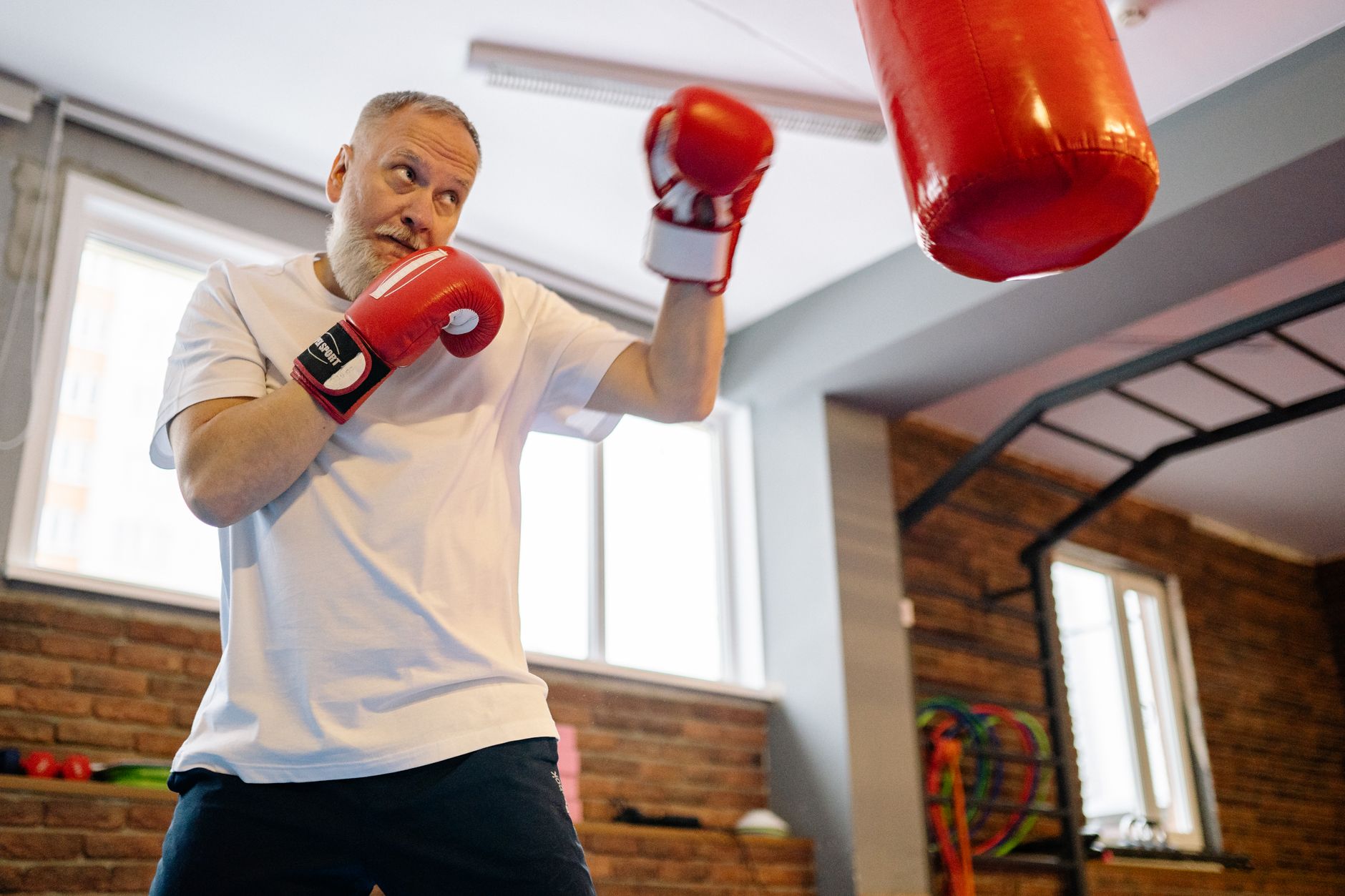
Boxing for Parkinson's means non-contact, coach-led exercise adapted for Parkinson's disease. It builds strength, balance, coordination and social connection without sparring or head contact. Families often ask if boxing is safe and worth trying. The short answer is that many people tolerate it well and report meaningful gains, with a doctor's clearance first.
Medical information disclaimer: This article is for general educational purposes only and does not provide medical advice, diagnosis, or treatment. Always consult a physician or other qualified health professional about symptoms, medications, tests, or treatment decisions.
Table of Contents
- How do classes work?
- What benefits have studies reported?
- Is boxing better than other exercise?
- How can you start safely?
How do classes work?
Typical sessions run about 90 minutes in coached groups one to three times each week. According to the American Academy of Neurology summary, classes combine aerobic work, strength, footwork, balance, hand-eye coordination and thinking tasks. All work is non-contact, with bags, pads, shadowboxing and movement drills instead of sparring.
Coaches adapt exercises to ability, and partner work adds social engagement. The Rock Steady Boxing nonprofit started in 2006 after founder Scott Newman's Parkinson's diagnosis. It now supports more than 800 affiliates in every U.S. state and 14 countries.
What benefits have studies reported?
According to the Parkinson's Foundation exercise guidance, non-contact boxing sits alongside biking, dance, yoga and Tai Chi as exercise that supports balance, mobility and low mood. That framing matters because exercise helps both movement and daily life, not just fitness. A 12-week Rush University pilot followed 14 adults with stage-two Parkinson's in community gym boxing.
📨 Get Free Parkinson's Guides Alerts
Free · No spam · Unsubscribe anytime
The Rush University report found lower total motor scores plus less depression, anxiety, sleep problems and pain. A larger 1,709-person preliminary survey described by the American Academy of Neurology compared current Rock Steady participants with non-participants. Participants scored 25 versus 32 on a 0-100 quality-of-life scale, with 70 percent reporting better social life and 63 percent less fatigue.
Is boxing better than other exercise?
The strongest head-to-head trial, by Combs and colleagues, randomized only 31 people to boxing versus traditional exercise for 24 to 36 sessions. Boxing is therefore promising but not proven superior to other vigorous exercise.
For patients and families, the practical point is consistency and intensity. The best exercise is vigorous, enjoyable and safe enough to continue for months. Ask what mix of aerobic effort, strength, balance and cognitive challenge each local option provides.
How can you start safely?
Classes are non-contact, adapted to ability and supervised. Patients should still get physician clearance and an intake assessment before starting, as affiliate programs described by Parkinson Canada require.
- Get clearance from the Parkinson's doctor, with fall, heart and blood pressure history noted
- Ask for an intake assessment and coach experience with Parkinson's
- Start with one class weekly, then build to two or three as tolerated
- Bring a medication list and ask how coaches handle freezing, fatigue and blood pressure drops
You Might Also Like
- Caring for Spouse with Parkinson’s Explained: What Patients and Families Should Know
- Can Boxing Glove Weight Affect Parkinson’s Tremor Control?
- What Is New With Exercise and Movement for Parkinson’s Disease in October 2026? Latest NIH, FDA, and trial records and Key Takeaways