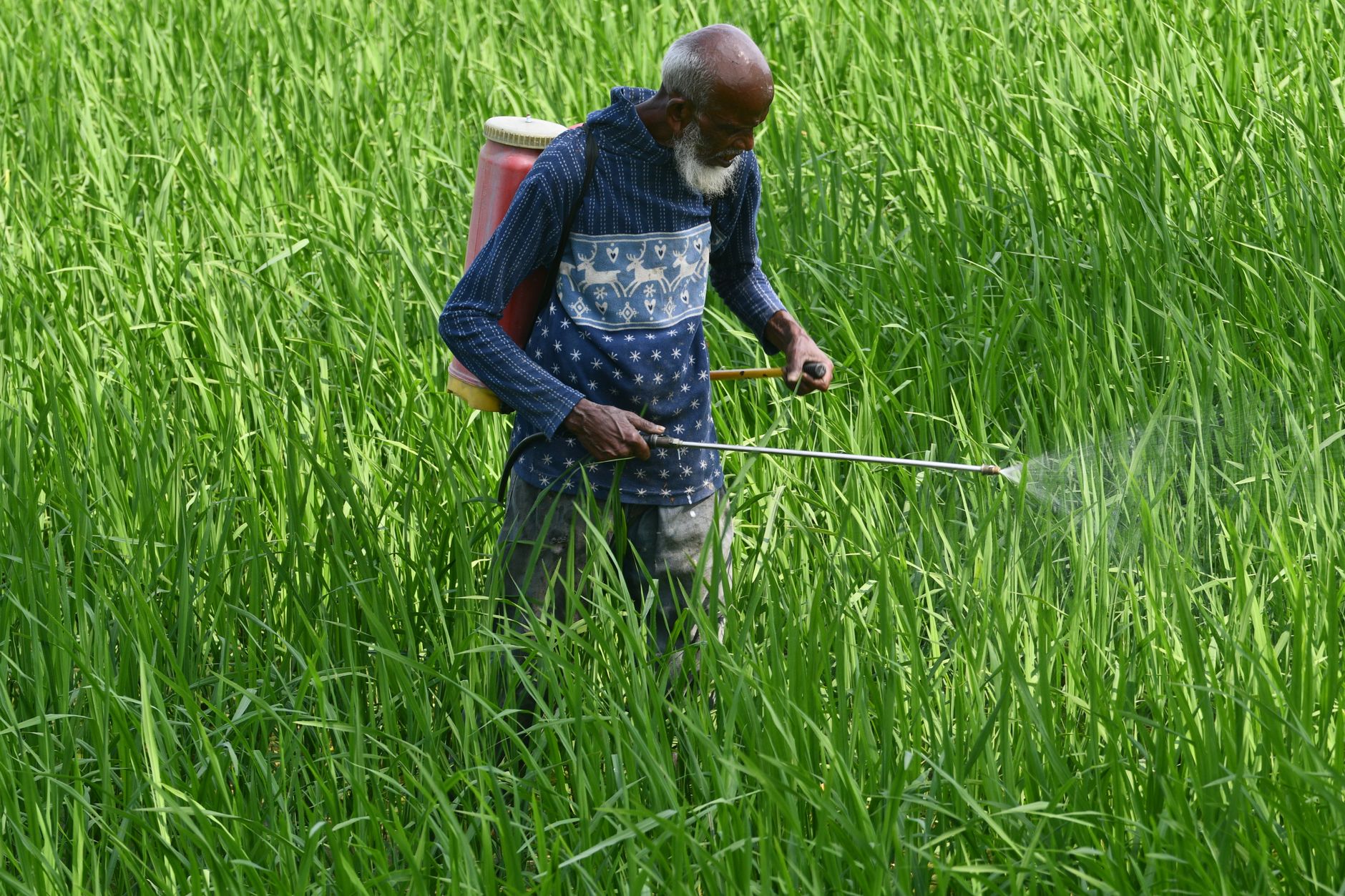
Researchers estimate decades-old pesticide exposure by geocoding lifetime home and work addresses and linking them to mandatory California pesticide records plus land-use maps dating to 1974, as described by NIH researchers in their detailed methods report. Ambient exposure means pesticide applied near where a person lived or worked, not only pesticide the person personally sprayed. The UCLA Parkinson's Environment and Genes study applied this approach in the Central Valley to about 368 newly diagnosed cases and 341 controls, estimating 1974-1999 exposure to maneb and paraquat around each address. That address history becomes the backbone for later dose calculations, work-history scoring, and risk comparisons.
Medical information disclaimer: This article is for general educational purposes only and does not provide medical advice, diagnosis, or treatment. Always consult a physician or other qualified health professional about symptoms, medications, tests, or treatment decisions.
Table of Contents
- How lifetime addresses become exposure records
- How researchers calculate dose around a home
- How farm jobs get their own score
- What combined exposures showed
- Where the estimates can mislead
How lifetime addresses become exposure records
Participants provide every home and workplace held over decades, with dates. Researchers convert each address to map coordinates, then place it against yearly pesticide-use reports and crop maps for the surrounding area.
This matters because most people cannot name products sprayed nearby 20 years earlier. The map record supplies the chemical, amount, location, and year. Personal memory only has to supply where the person was and when.
How researchers calculate dose around a home
Exposure is quantified by weighting annual pounds applied by the share of treated acreage within about a 500-meter buffer of a residence or workplace, then summing across years for cumulative dose, as NIH researchers explain in their exposure-modeling paper. A large application close to home counts more than a small or distant one.
Years add up. Ten years near moderate use can produce a higher cumulative score than one year near heavy use. That running total lets researchers compare long-term residents, movers, and people who also worked near fields.
📨 Get Free Parkinson's Guides Alerts
Free · No spam · Unsubscribe anytime
How farm jobs get their own score
For jobs, researchers use a job-exposure matrix that converts lifetime work histories and specific tasks into cumulative occupational scores. Mixing, applying, and field reentry carry different weights because direct handling differs from entering a treated field.
The prospective Agricultural Health Study of licensed applicators and spouses in Iowa and North Carolina took a related approach through enrollment questionnaires, and NIEHS reporting on that study found rotenone or paraquat users developed Parkinson's about 2.5 times more often in its summary of the findings. Home maps capture drift and nearby use, while job histories capture direct contact.
- List every address with move-in and move-out years
- List employers, job titles, and tasks such as mixing or reentry
- Note well water, field distance, and protective equipment when asked
What combined exposures showed
Living or working near combined paraquat plus maneb raised Parkinson's risk about 75%, while workplace paraquat plus ziram raised it about 80% and all three together about threefold. Those figures come from Central Valley analyses of ambient and workplace contact.
The pattern points to mixtures. Residents near fields rarely encounter one chemical alone because products are co-applied across seasons. Studies therefore analyze long windows such as 10-20 years before diagnosis and control for co-applied pesticides.
Where the estimates can mislead
Recall of specific pesticides fades over decades, self-reports can suffer recall bias, and no validated biomarker proves which chemical reached the brain, according to a Journal of Neural Transmission review in its discussion of exposure limits. Records also vary by state and era, so California results do not directly equal risk elsewhere. For readers, the practical use is narrow: give complete address and job histories when joining a study or clinic registry, keep old work records if available, and interpret a single nearby spraying season as only one piece of a much longer exposure record.
You Might Also Like
- Parkinson’s Brain Changes Before Motor Symptoms: What a New Two-Macaque Study Can Tell Us
- Paraquat and Parkinson’s Disease: Why Different Studies Reach Different Conclusions
- Parkinson’s Disability Benefits Research Review: Findings, Gaps, and Practical Context