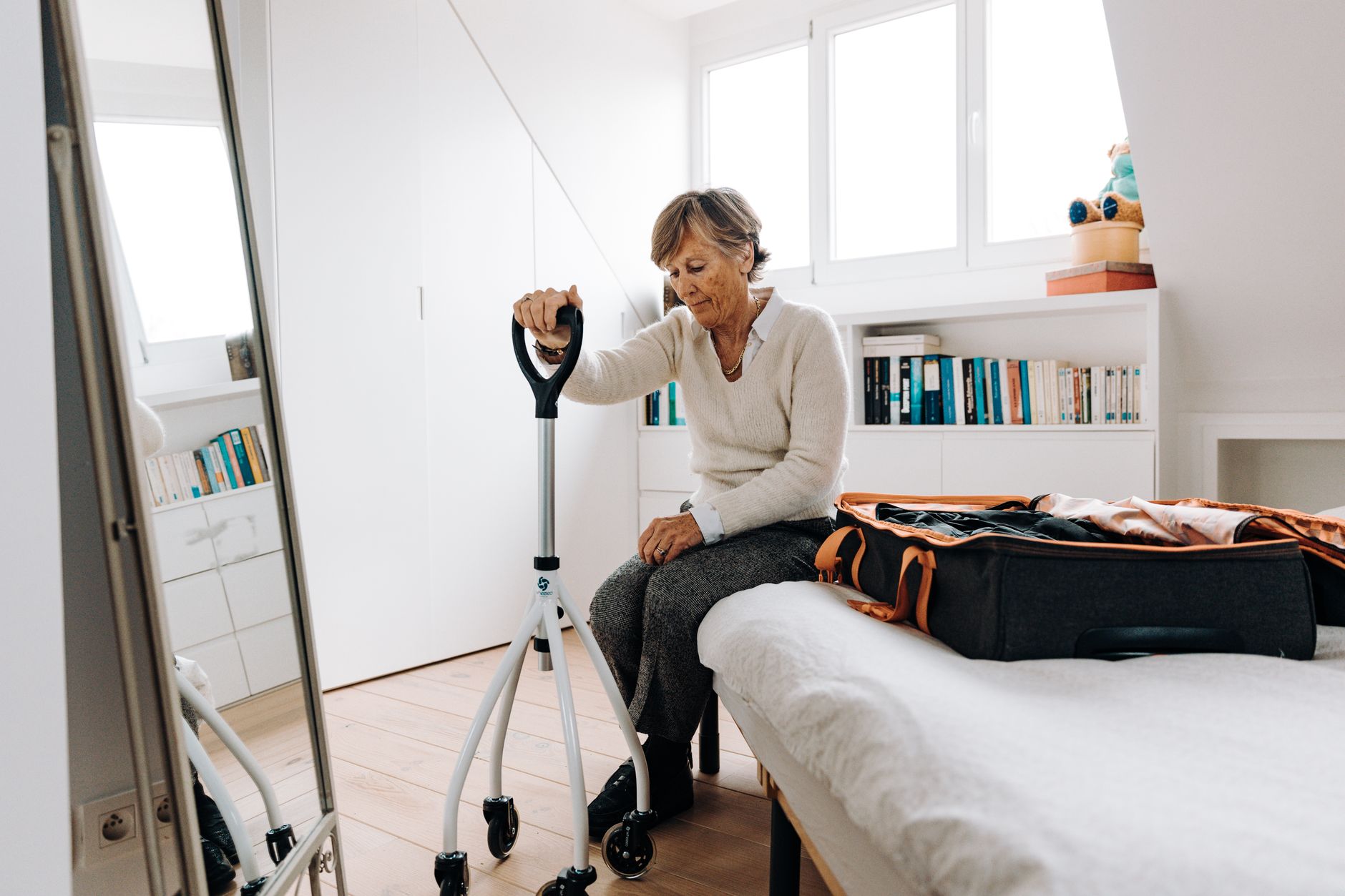
Traveling with Parkinson's goes most smoothly when medication stays on schedule, mobility help is booked ahead, and airport screening is planned in advance. Parkinson's disease is a brain disorder that causes tremor, stiffness, and slow movement, so timing and fatigue matter on travel days. Caregivers can help watch the clock, carry backup doses, and request assistance. A short call to the neurologist before a long flight can prevent missed-dose problems.
Medical information disclaimer: This article is for general educational purposes only and does not provide medical advice, diagnosis, or treatment. Always consult a physician or other qualified health professional about symptoms, medications, tests, or treatment decisions.
Table of Contents
- Keep Doses on Time Across Time Zones
- What Goes in Your Carry-On?
- How Do You Get Through Security?
- How Do You Arrange Mobility Help and Boarding?
Keep Doses on Time Across Time Zones
The American Parkinson Disease Association advises staying close to usual dosing intervals when crossing time zones. Phone alarms or a travel companion can serve as reminders, as described in its time-zone travel guidance.
Large time shifts may require adding or dropping a dose. Confirm that plan with the neurologist before departure. Write the agreed schedule in local times for each travel day.
What Goes in Your Carry-On?
The Michael J. Fox Foundation advises keeping all prescription and over-the-counter medicines in carry-on baggage, with extra doses for delays.
Carry a written medication list with doctor contacts in case care is needed away from home, as explained in its travel tips for Parkinson's. Keep this kit under the seat, not overhead. Refill it before the return trip.
📨 Get Free Parkinson's Guides Alerts
Free · No spam · Unsubscribe anytime
- Original pill bottles plus a daily pill organizer for easy dosing
- Extra doses for at least one or two days beyond the trip
- Written list with drug names, doses, times, allergies, and doctor numbers
- Water, small snack, and phone alarms set to the next dose
How Do You Get Through Security?
The Transportation Security Administration permits pills and solid medications in carry-on and checked bags with no federal requirement to show them unless liquid. Medically necessary liquids, gels, and creams over 3.4 ounces are allowed in reasonable quantities but must be declared for separate screening, according to TSA medical guidance.
Travelers can request screening help through TSA Cares at least 72 hours before departure at (855) 787-2227 or by online form. The program does not exempt anyone from screening, according to TSA passenger support. Arrive early so tremor, slowness, or freezing do not feel rushed.
How Do You Arrange Mobility Help and Boarding?
Tell the airline, rail, or bus carrier about Parkinson's before travel. Ask for early boarding, wheelchair or cart escort, attendant help, and reasonable layovers with rest and stretch breaks.
Pick an aisle seat near the front for easier standing and walking. People with deep brain stimulation implants should carry the maker's device card, tell officers before screening, and request a pat-down.
You Might Also Like
- Driving With Parkinson’s Disease: Safety Assessments and Alternatives
- Understanding Parkinson’s Fatigue: Evidence, Limits, and Next Steps
- Understanding Parkinson’s Disease Liftware: Evidence, Limits, and Next Steps