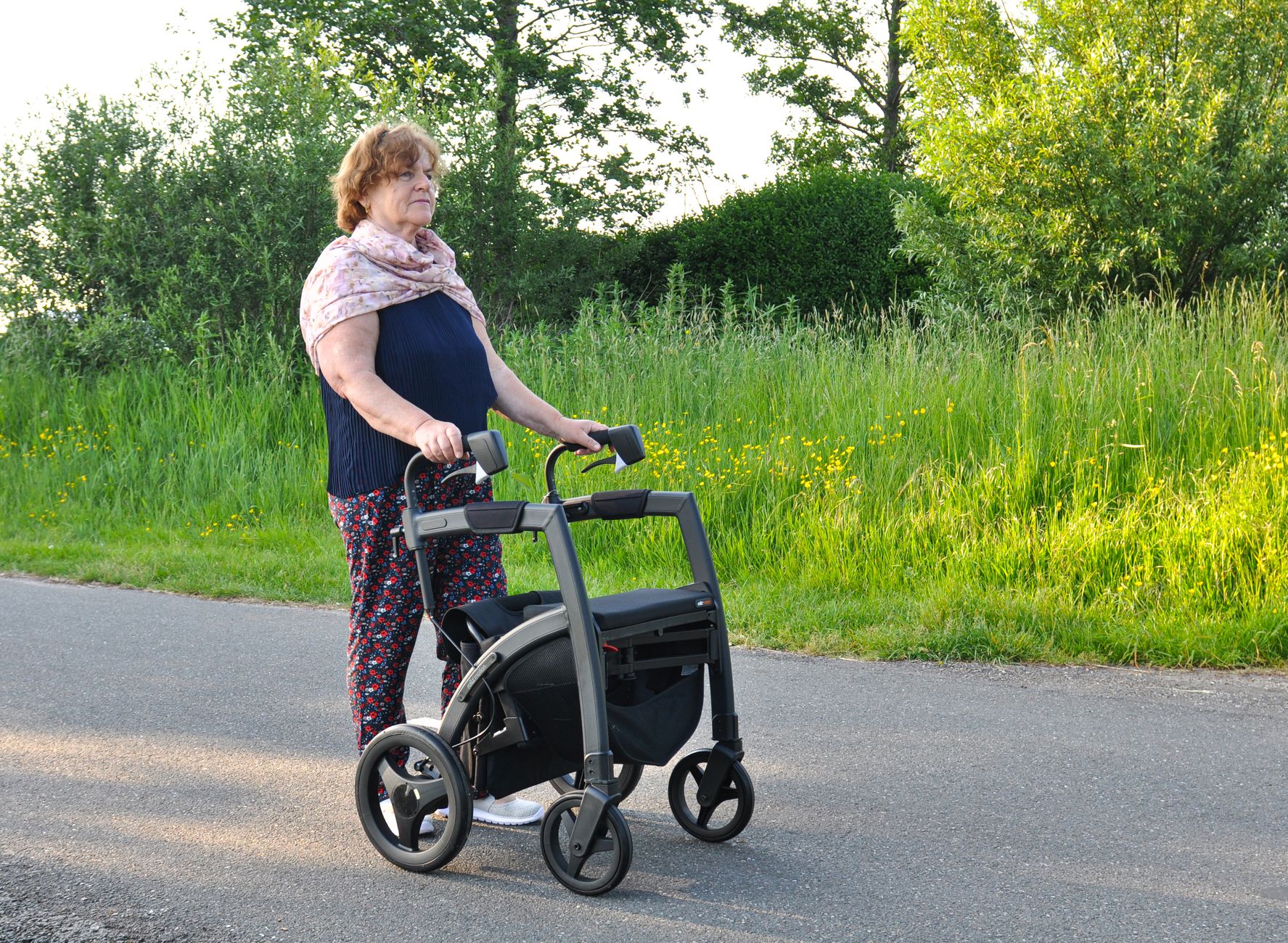
Parkinson’s disease causes a distinctive stooped or flexed posture because the loss of dopamine-producing neurons disrupts the basal ganglia—the brain region responsible for controlling posture, balance, and automatic movement patterns. When dopamine levels drop, the brain loses its ability to maintain the neural signals that keep your back straight and your body upright. Instead, the postural muscles gradually shift into a forward-flexed position, creating the characteristic hunched appearance seen in many people with advanced Parkinson’s. A 65-year-old newly diagnosed patient might notice a slight rounding of the shoulders at first, but over months or years, this can progress to a pronounced forward lean that affects walking, breathing, and daily function.
The stooped posture develops because dopamine normally regulates the balance between excitatory and inhibitory signals in the motor system. When this chemical messenger becomes scarce, the muscles that would ordinarily counteract gravity and maintain extension of the spine lose their neural support. The result is that flexor muscles (those that bend the body forward) gain a relative advantage over extensor muscles (those that straighten the body), pulling the trunk into flexion. This isn’t a voluntary slumping or fatigue—it’s a neurological consequence of the disease itself, and it worsens as Parkinson’s progresses.
Table of Contents
- How Dopamine Depletion Affects Posture Control in Parkinson’s
- Rigidity and Muscle Tone Changes Behind Stooped Posture
- Connection Between Tremor, Bradykinesia, and Forward Lean
- Physical Therapy and Exercise Interventions for Postural Management
- Balance Problems and Fall Risk From Progressive Postural Decline
- Postural Changes in Early Versus Advanced Parkinson’s
- Breathing and Organ Function Complications of Severely Stooped Posture
How Dopamine Depletion Affects Posture Control in Parkinson’s
The basal ganglia circuits that depend on dopamine include the direct pathway and indirect pathway, which work together to permit smooth, coordinated movement and maintain postural stability. When dopamine neurons die, the balance between these pathways tips heavily in favor of inhibition, locking muscles into patterns that promote flexion rather than extension. This is why a person with Parkinson’s may feel as though their body naturally wants to curl forward, regardless of conscious effort to stand straight.
The postural centers in the brainstem and midbrain also rely on dopamine signals, and their dysfunction compounds the problem by reducing the automatic corrections that normally prevent falling forward. Research shows that dopamine loss in specific regions—particularly the substantia nigra, ventral tegmental area, and parts of the striatum—directly correlates with the severity of postural abnormalities. A person with mild Parkinson’s might maintain near-normal posture in the early stages, but as cell death progresses, the postural deficit accelerates. Some studies indicate that up to 60% of people with Parkinson’s develop a noticeable stooped posture within 5 to 10 years of diagnosis, depending on the disease’s progression rate and individual factors such as genetic risk and response to dopaminergic medication.
Rigidity and Muscle Tone Changes Behind Stooped Posture
Rigidity—the increased stiffness and resistance to passive movement—is both a cause and consequence of stooped posture in Parkinson’s. Dopamine depletion causes muscles throughout the torso and spine to become rigid and locked in a flexed state. Unlike the spasticity seen in stroke, Parkinson’s rigidity affects both flexor and extensor muscles equally; however, gravity pulls the body forward, so the net effect is flexion. An example is a patient who cannot straighten their neck or shoulders even when trying consciously—the muscles simply won’t relax and extend fully.
This rigidity also makes it harder to perform the micro-corrections your nervous system normally makes to stay upright, so balance becomes increasingly precarious. The relationship between rigidity and postural decline is progressive and bidirectional. As posture worsens and the spine remains bent forward, the mechanical stress on spinal ligaments and muscles increases, leading to secondary tightness and pain. Physical therapy may slow this process but cannot fully reverse it in advanced stages, because the underlying dopamine loss persists. Medication can improve rigidity and temporarily help posture, but the benefit typically plateaus as the disease advances and more neurons are lost.
Connection Between Tremor, Bradykinesia, and Forward Lean
While tremor (involuntary shaking) is often the most visible sign of Parkinson’s, it is bradykinesia—the slowness of movement—that most directly links to postural changes. Bradykinesia means the small, automatic postural adjustments your body normally makes dozens of times per minute happen much more slowly or not at all in Parkinson’s. When walking, a healthy person continuously makes tiny shifts in weight, arm swing, and trunk lean to stay balanced; a person with Parkinson’s may not make these adjustments quickly enough, resulting in a forward-leaning gait to compensate.
For example, a patient might notice they can no longer catch themselves if they trip slightly, or that turning while walking feels dangerously unstable because the postural system is too slow to react. Tremor can also indirectly contribute to posture changes by prompting people to adopt protective positions—leaning forward may feel more stable when tremor is active, even though it actually increases fall risk. This learned postural adaptation, combined with the neurological drive toward flexion, reinforces the stooped appearance over time. The interplay between tremor, slowness, and loss of postural reflexes creates a downward spiral in which motor function steadily deteriorates.
Physical Therapy and Exercise Interventions for Postural Management
Physical therapy and targeted exercise are among the few interventions that can meaningfully slow postural decline, though they work best when started early and practiced consistently. Therapies that emphasize spinal extension, backward walking, and large amplitude movements have shown modest benefit in maintaining upright posture and improving gait mechanics. A patient who participates in regular physical therapy 2-3 times per week may maintain better posture for longer than someone who does not, though the rate of progression varies. However, the key limitation is that physical therapy addresses the symptom (the bent posture) rather than the cause (dopamine loss), so even optimal therapy cannot prevent eventual worsening in most cases.
📨 Get Free Parkinson's Guides Alerts
Free · No spam · Unsubscribe anytime
Exercises that specifically train posture awareness and spinal extension—such as standing against a wall, lying prone on an exercise ball, or performing backward walking on a treadmill—can help maintain some flexibility and strength in the extensor muscles. The trade-off is that these exercises require significant effort and motivation from the patient, and they must be sustained for life, not just for a few weeks. Dopaminergic medication (levodopa, dopamine agonists) can improve the ability to maintain posture temporarily, but the postural benefit often diminishes as the disease progresses and medication response wanes. Combined physical therapy and optimized medication offers the best outcome.
Balance Problems and Fall Risk From Progressive Postural Decline
Stooped posture directly increases fall risk because it shifts the body’s center of gravity forward, beyond the base of support provided by the feet. A person with a severely flexed posture is in a precarious position—their weight is already forward, so even a minor disturbance (a small trip, a gust of wind, a moment of dizziness) can result in a fall. Falls in Parkinson’s are particularly dangerous because the person often cannot catch themselves; the combination of slow movement and poor postural reflexes means they may tumble forward with little ability to brake or protect themselves. Hip fractures, head injuries, and other serious trauma are common consequences, making postural management as much a safety issue as a functional one.
Studies show that postural instability and stooped posture are among the strongest predictors of falls in Parkinson’s patients. The warning sign is when a person begins to adopt a cautious, narrow-based gait or requires a walker or cane for stability—these adaptations compensate for poor posture and balance but indicate that fall risk is rising substantially. Environmental modifications (removing trip hazards, improving lighting, installing grab bars) and gait aids become increasingly important as posture worsens. Despite these precautions, many people with advanced Parkinson’s experience at least one significant fall, and fall prevention becomes a major concern for both patient and caregiver.
Postural Changes in Early Versus Advanced Parkinson’s
In early-stage Parkinson’s, postural changes are often subtle—a slight rounding of the shoulders, a tendency to hunch forward when concentrating, or a reduced ability to stand completely upright without conscious effort. At this stage, the problem is largely neurological (loss of automatic postural control) but not yet severely limiting. A person might notice that their clothes fit differently or that photos show them with worse posture than they remember. In contrast, advanced Parkinson’s can produce a dramatic flexed posture, with the trunk bent 20, 30, or even 45 degrees forward.
This severe kyphosis (excessive forward curvature of the spine) is sometimes called “Pisa syndrome” when the lean is sideways, though forward lean is more common. The progression from early to advanced postural changes typically occurs over 5 to 15 years, though the rate varies. Genetic factors, initial disease severity, medication response, and engagement in physical therapy all influence the trajectory. Some people develop severe postural changes within a few years, while others may have relatively mild changes even after 15 years with the disease. Secondary changes—such as osteoporosis, degenerative disc disease, and muscle atrophy from disuse—accumulate over time and make the posture more difficult to correct, even with therapy.
Breathing and Organ Function Complications of Severely Stooped Posture
A severely stooped posture compresses the chest cavity and can reduce lung capacity, sometimes by 20% or more in advanced cases. This mechanical restriction makes breathing more difficult, especially during exertion, and can contribute to shallow breathing and reduced oxygen intake during sleep. A patient with advanced kyphosis might notice that climbing stairs leaves them winded much more quickly than it should, or that lying flat is uncomfortable because the forward-bent spine makes full chest expansion impossible. In some cases, a person may need to use a wedge pillow or special positioning just to sleep comfortably.
The stooped posture also affects abdominal and digestive function by compressing the stomach and intestines, potentially worsening constipation and gastroesophageal reflux—two conditions already common in Parkinson’s due to slowed GI motility. Posture even influences swallowing mechanics; a person who is severely bent forward may find it harder to swallow safely because the larynx is in an abnormal position. These organ-system effects are often underappreciated consequences of postural decline and can significantly affect quality of life. Attention to posture, when possible, may help minimize these secondary complications.
- —
You Might Also Like
- Why Stress Can Make Parkinson’s Tremor Worse
- Why Loss of Smell Can Appear Before Parkinson’s Movement Problems
- Can a Softer Voice Be an Early Parkinson’s Symptom?