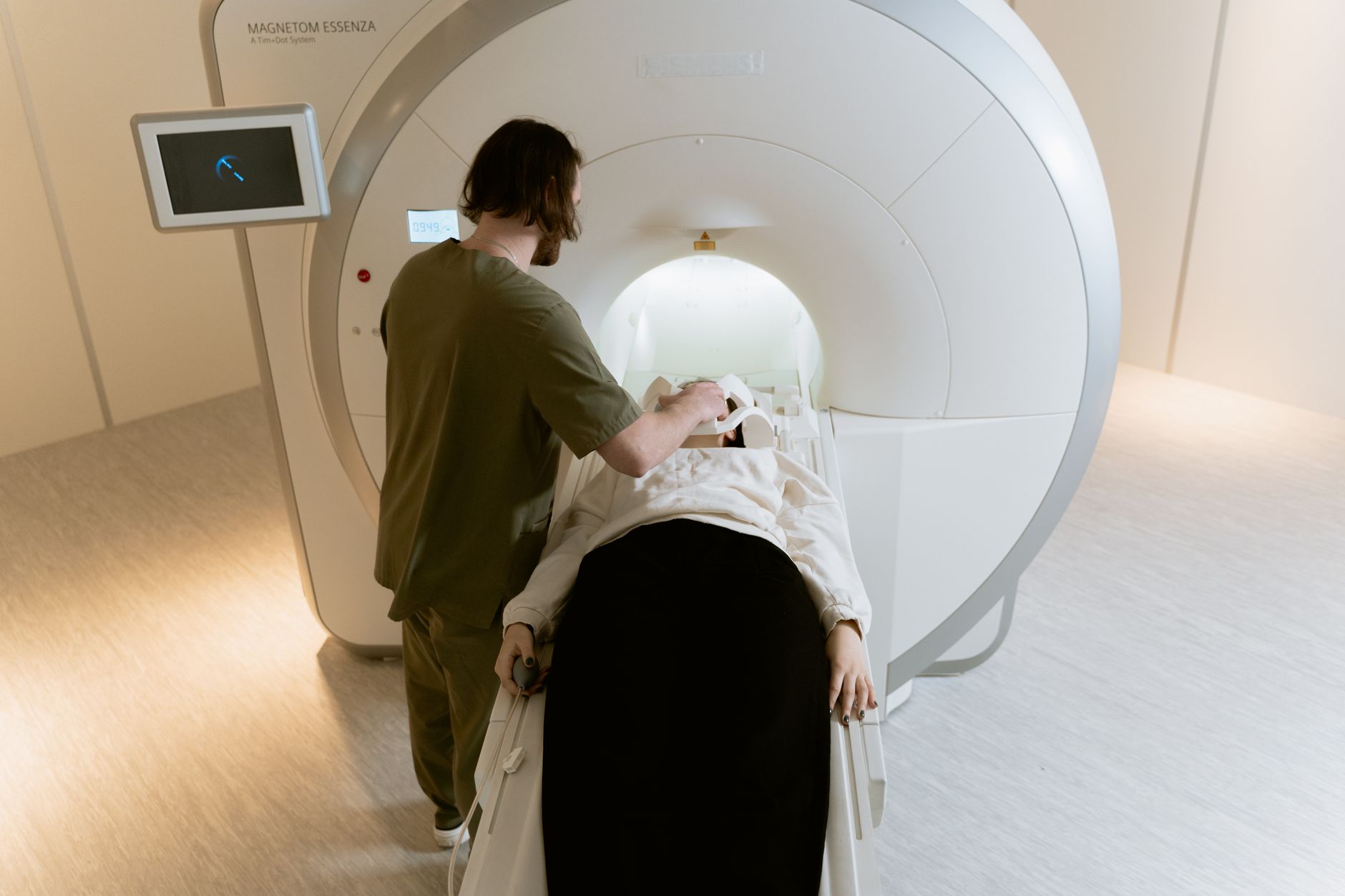
A DaTscan is a specialized nuclear imaging test that detects dopamine activity in the brain, helping neurologists distinguish Parkinson’s disease from other conditions that mimic its symptoms. During the test, patients receive a small injection of a radioactive tracer compound that binds to dopamine transporters—proteins that recycle dopamine in the brain. A scanner then creates images showing where dopamine activity is preserved or depleted. For someone experiencing tremor, stiffness, and slowness, a DaTscan can clarify whether these symptoms stem from actual Parkinson’s disease, where dopamine neurons degenerate, or from other movement disorders like essential tremor or drug-induced parkinsonism, where dopamine levels remain normal.
The DaTscan fills a critical diagnostic gap because Parkinson’s disease cannot be confirmed through blood tests or standard MRI imaging. Doctors must rely on clinical observation and patient history, but early-stage symptoms often overlap with other conditions. A positive DaTscan showing reduced dopamine activity in key brain regions—particularly the putamen and caudate—provides objective evidence that dopamine neurons are dying. This confirmation allows neurologists to prescribe appropriate treatments, counsel patients realistically about disease progression, and enroll people in clinical trials that require confirmed Parkinson’s diagnosis.
Table of Contents
- How Does DaTscan Help Differentiate Parkinson’s from Look-Alike Conditions?
- What Does the DaTscan Imaging Process Reveal About Brain Chemistry?
- What Role Does DaTscan Play in Confirming Atypical Parkinson’s Syndromes?
- What Happens During a DaTscan Procedure and How Should Patients Prepare?
- What Are the Limitations and When Can DaTscan Give Misleading Results?
- How Does DaTscan Compare to Other Diagnostic Tests for Parkinson’s?
- What Information Does DaTscan Provide About Future Monitoring and Disease Progression?
- Frequently Asked Questions
How Does DaTscan Help Differentiate Parkinson’s from Look-Alike Conditions?
One of DaTscan’s primary roles is ruling out conditions that resemble Parkinson’s but require entirely different treatments. Essential tremor, for example, causes a prominent shaking that patients and even some doctors initially mistake for Parkinson’s, yet the brain’s dopamine system remains intact. A DaTscan in an essential tremor patient shows normal dopamine transporter binding, while someone with Parkinson’s shows a characteristic pattern of reduced binding, especially on one side of the brain early in the disease.
Similarly, a medication side effect called drug-induced parkinsonism—caused by antipsychotics or some anti-nausea drugs—produces Parkinson’s-like symptoms, but a DaTscan distinguishes it because the dopamine system is either normal or shows a different pattern than idiopathic Parkinson’s disease. Vascular parkinsonism, where small strokes in the basal ganglia cause stiffness and slow movement, is another mimic. Patients with vascular parkinsonism often show normal dopamine transporter binding on DaTscan, whereas someone with true Parkinson’s shows the characteristic “comma-shaped” or severely reduced pattern. Getting this distinction right matters enormously because a patient misdiagnosed with Parkinson’s when they actually have essential tremor might undergo unnecessary dopamine-replacement therapy, which won’t help and can cause side effects like nausea or hallucinations.
What Does the DaTscan Imaging Process Reveal About Brain Chemistry?
The DaTscan uses a radioactive tracer compound called ioflupane, labeled with iodine-123, that specifically attaches to dopamine transporters—the cellular structures responsible for reabsorbing dopamine after it’s released. In a healthy brain, this tracer distributes evenly across both sides, creating a symmetric “comma” or crescent shape in the putamen and a round dot in the caudate nucleus. In Parkinson’s disease, the pattern becomes asymmetric and depleted, sometimes showing a “inverted C” or nearly absent uptake, reflecting the actual loss of dopamine-producing neurons in those regions. A significant limitation of DaTscan is that it cannot diagnose Parkinson’s disease alone—it is always interpreted alongside clinical symptoms.
Some people with normal DaTscan results still have early-stage Parkinson’s disease, because the test’s sensitivity improves as the disease progresses and more dopamine neurons die. Additionally, DaTscan cannot predict how fast someone’s Parkinson’s will advance or whether they’ll develop complications like dementia or freezing of gait. The test shows a snapshot of current dopamine status, not a forecast. Some patients with very mild symptoms and a borderline DaTscan result receive a diagnosis of “probable” Parkinson’s, with plans for repeat imaging in 1–2 years if symptoms progress.
What Role Does DaTscan Play in Confirming Atypical Parkinson’s Syndromes?
Doctors sometimes encounter patients with movement symptoms that seem like Parkinson’s but follow an unusual pattern—rapid progression, unusual symptoms like vertical gaze problems or early dementia, or poor response to dopamine medication. These atypical presentations raise concern for conditions like progressive supranuclear palsy (PSP), corticobasal degeneration (CBD), or multiple system atrophy (MSA). While DaTscan is not specific enough to diagnose these conditions on its own, it does show whether dopamine depletion is present.
A patient with symptoms suggesting PSP might have a DaTscan showing asymmetric dopamine loss, pointing toward a diagnosis of Parkinson’s disease rather than PSP. In clinical practice, a neurologist might order DaTscan when a patient’s symptoms don’t fit the typical Parkinson’s profile—for instance, a 50-year-old with rapid cognitive decline, marked rigidity, and minimal tremor. If the DaTscan shows normal dopamine transporter binding, the neurologist can pursue other diagnoses like frontotemporal dementia or Alzheimer’s disease. If it shows significant depletion, it confirms dopaminergic neurodegeneration and suggests that Parkinson’s disease or one of its atypical variants is present, guiding more specialized imaging or evaluation.
What Happens During a DaTscan Procedure and How Should Patients Prepare?
The DaTscan procedure takes place in two stages, typically one week apart. During the first visit, patients receive an injection of the radioactive tracer intravenously and wait two to six hours while it circulates and binds to dopamine transporters in the brain. On the second visit, they lie still under a gamma camera for about 30 minutes while the scanner detects the radiation and creates images. The entire process is painless and non-invasive, though patients must remain motionless during imaging to avoid blurring the scan.
Before undergoing DaTscan, patients should notify their neurologist of any medications, especially beta-blockers, certain antidepressants, and stimulants, which can interfere with the tracer’s binding. Unlike PET imaging, DaTscan carries minimal radiation exposure—roughly equivalent to a CT scan of the abdomen. A tradeoff is that DaTscan is more expensive than routine clinic visits or standard brain MRI, often costing $3,000–$5,000, though insurance typically covers it when ordered by a neurologist for diagnostic purposes. The test is widely available at major medical centers and hospitals with nuclear medicine departments, but patients in rural areas may need to travel for the procedure.
What Are the Limitations and When Can DaTscan Give Misleading Results?
While DaTscan is valuable, it is not foolproof. Approximately 15–20% of people clinically diagnosed with Parkinson’s disease show normal or only mildly abnormal DaTscan results, suggesting either very early disease where dopamine neuron loss is just beginning or a misdiagnosis. Conversely, some studies show that asymptomatic relatives of Parkinson’s patients—people with no movement symptoms yet—can show reduced dopamine transporter binding, raising the possibility they carry a genetic risk for future disease. This phenomenon creates uncertainty: a normal DaTscan doesn’t definitively rule out Parkinson’s if the clinical picture is otherwise convincing, and an abnormal DaTscan doesn’t guarantee someone will develop symptoms.
Another limitation is that certain medications can artificially alter DaTscan results. Some antipsychotics and certain antiemetics block dopamine transmission downstream, making the scan appear worse than the underlying pathology justifies. Stimulant medications like methylphenidate can also affect binding patterns. Furthermore, DaTscan cannot distinguish between Parkinson’s disease and parkinsonian syndromes like PSP or MSA with 100% accuracy—they all show dopamine depletion, though sometimes in different patterns. Patients should understand that a DaTscan result, while informative, is one piece of evidence interpreted alongside their clinical history, neurological exam, and response to treatment.
📨 Get Free Parkinson's Guides Alerts
Free · No spam · Unsubscribe anytime
How Does DaTscan Compare to Other Diagnostic Tests for Parkinson’s?
Neurologists have several imaging and testing options when evaluating a patient with possible Parkinson’s disease. Brain MRI can rule out structural problems like tumors or stroke but does not show dopamine activity, so it is often normal in Parkinson’s patients. PET imaging with fluorodopa is more sensitive and specific than DaTscan but is less widely available and more expensive. Functional MRI (fMRI) measures blood flow changes, not dopamine directly. Among readily available tests, DaTscan strikes a practical balance: it is sensitive to dopamine depletion, widely accessible, relatively affordable compared to PET, and carries minimal radiation.
A practical consideration is timing and cost. A patient suspected of Parkinson’s might first receive an MRI to exclude stroke or tumor, followed by a clinical trial of dopamine medication (like levodopa) to observe response. If the response is clear and symptoms classic, a DaTscan may not be necessary. However, if the diagnosis remains uncertain—perhaps the patient isn’t responding as expected or symptoms are atypical—DaTscan becomes the next logical step. Some neurologists order DaTscan early to establish a baseline, especially when considering enrollment in Parkinson’s disease research studies, which typically require confirmed dopamine depletion.
What Information Does DaTscan Provide About Future Monitoring and Disease Progression?
Although DaTscan images a single point in time, serial scans over years can show whether dopamine neuron loss is continuing. Researchers and some clinical practices perform repeat DaTscan at intervals to track disease progression, though this is not routine in everyday care. A patient scanned at diagnosis and again three years later may show further decline in dopamine activity, confirming that the neurodegenerative process is ongoing, whereas an unexpectedly stable scan might suggest a slower disease course.
This information occasionally influences treatment decisions—a patient showing rapid dopamine decline might warrant earlier introduction of neuroprotective strategies or more aggressive symptom management. In clinical trials of new Parkinson’s therapies, DaTscan is often used as an objective marker of disease change, because motor symptom scales are subjective and can be influenced by patient effort, mood, and placebo effects. A treatment that genuinely slows dopamine neuron loss should eventually show up on repeat DaTscan imaging. Some early-stage Parkinson’s trials use DaTscan decline as a primary outcome measure, hoping to detect whether a drug can slow the rate of dopamine system deterioration, a finding that would represent a major therapeutic breakthrough.
Frequently Asked Questions
Is DaTscan the same as a PET scan?
No. DaTscan uses a single-photon emission computed tomography (SPECT) camera and a specific tracer for dopamine transporters. PET imaging uses different tracers and equipment. Both can image dopamine, but DaTscan is more widely available and less expensive.
Can DaTscan show if my Parkinson’s is getting worse?
A single DaTscan shows a snapshot of dopamine activity at that moment. Serial scans years apart can reveal whether dopamine depletion is progressing, but routine clinical care does not require repeat DaTscan. Your neurologist tracks progression through symptom observation and response to medication.
Does DaTscan hurt or have side effects?
The injection is a quick needle stick, similar to a blood draw. The tracer dose is radioactive but extremely small and safe. Most patients experience no side effects. You must remain still during the 30-minute imaging scan, which can be slightly uncomfortable for people with stiffness.
Can DaTscan show if I’ll develop dementia or other complications?
No. DaTscan shows dopamine activity in motor-control regions but cannot predict complications like cognitive decline, hallucinations, or autonomic dysfunction. Prognosis depends on many factors beyond what this test reveals.
What if my DaTscan is normal but my neurologist still thinks I have Parkinson’s?
It’s possible, especially in very early disease. Approximately 15–20% of clinically diagnosed Parkinson’s patients have normal or borderline DaTscan results. Your doctor weighs the scan result against your symptoms, exam findings, and response to medication to make the final diagnosis.
How much does DaTscan cost?
Typically $3,000–$5,000. Insurance usually covers it when ordered by a neurologist for diagnostic evaluation of suspected Parkinson’s disease. Out-of-pocket cost varies by insurance plan and institution.
You Might Also Like
- Why Parkinson’s Disease Can Cause Oily or Flaky Skin
- Why Parkinson’s Can Cause a Feeling of Internal Trembling
- Why Parkinson’s Can Cause Reduced Facial Expression